 Lynne Goldberg Meditation

Midlife has a way of knocking the wind out of us. Our bodies change, our children leave or our parents need us more, and sometimes the big losses come all at once.
If you’re a woman in midlife looking for a way to meet all of that with a little more steadiness, meditation is one of the kindest places to start. I know, because it’s how I came through my own midlife changes, and it’s what I teach now.
Why midlife can feel so disorienting
So many of us started out on a road someone else drew for us, doing what our teachers and parents expected and working hard to become the person we were supposed to be. Then, somewhere in midlife, we look up and realize much of it was other people’s dreams and wishes.
Midlife is often the moment when the life we carefully constructed begins to change. It can be disorienting, painful, liberating, and deeply creative.
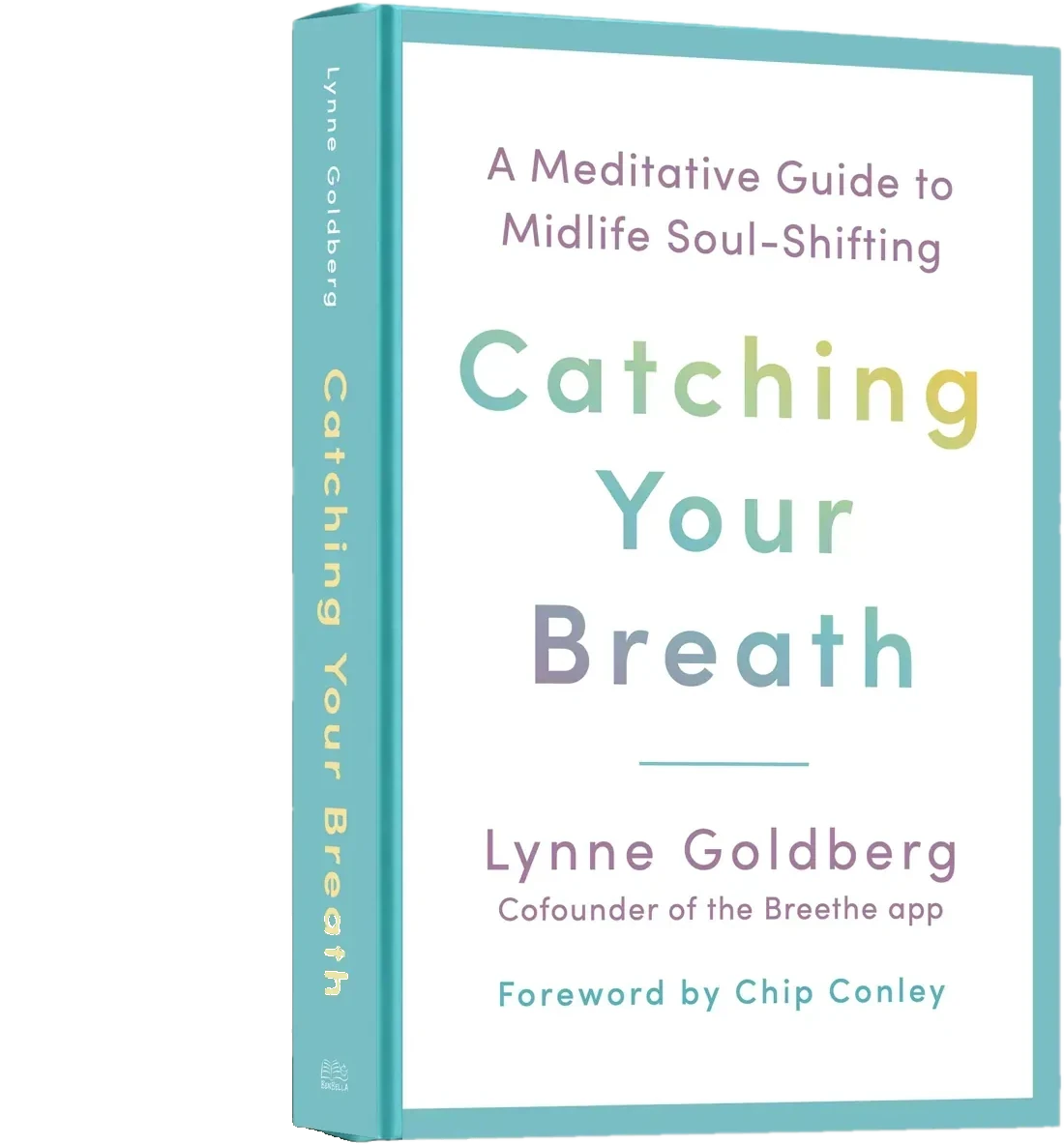
That’s why I wrote my book, Catching Your Breath, specifically for this time of life. It’s literally called Catching Your Breath because life winds you. And when it does, the most helpful thing is often a pause, long enough to choose what comes next instead of reacting from old habits.
What meditation does for your body and mind
When we’re under constant stress, our bodies react as if something bad is happening, even when it’s just a worrying thought or a buzzing phone. We get a rush of stress hormones like cortisol and adrenaline, and our heart rate goes up.
Meditation moves us the other way, toward a calmer, more relaxed state. It’s not rocket science. It’s that couple of breaths, and it’s really a life changer.
Four practices for midlife women
1. Five minutes to begin your day
Start your day before your phone starts your day. Before you check anything, sit for five quiet minutes and notice your breath. My five-minute meditation for peace walks you through it.
2. Coming home to your body
So many women have spent years judging their bodies, and perimenopause and menopause can bring that right back up. Try this: sit or lie down, and slowly move your attention from your feet to the top of your head. Notice each part without deciding whether it’s good or bad. One of the things I’d love my book to do is help us feel completely at home in our bodies at this stage of life. Noticing them with kindness is where that starts.
3. A gentler way into sleep
If you’re tired but wired at night, you’re not alone. I created my sleep practices for exactly these midlife nights. Start with sleep meditation for menopause, or what to do when your mind won’t leave the day alone.
4. The choicefulness pause for big decisions
Midlife brings big choices, like whether to stay or go. When you feel the pull of an old reaction, pause. Feel your feet, take a breath, and ask yourself, “Is this reaction taking me where I want to go?” Then choose only the next right step. I call this choicefulness, and it’s at the heart of everything I teach.
What I learned from my own midlife changes
In just a few years, I was diagnosed with cancer twice, my marriage of twenty years ended, and my daughter went off to school. None of those things was easy, and all together they were a lot.
But I had been here before, and I had a practice. I gave myself permission to grieve, and I began to see that each of those events gave me a chance to choose my next step. Some of those steps surprised me. I found myself dating again in my late fifties, which was a whole new experience, and a really fun time in my life that I wouldn’t otherwise have had.
Some changes hurt, and some never make sense, but a pause and a little awareness can help you find what’s still possible.
Questions midlife women ask me
Can meditation help with menopause?
Meditation can help you meet the changes with more calm, notice what your body needs, and rest more easily at night. It isn’t a medical treatment, so please talk to your doctor about symptoms, and use meditation alongside that care.
I’ve never meditated. Is it too late to start?
Not at all. Meditation is a skill you can train at any age. My guide to meditation for beginners over 50 is a good place to start.
How much time do I need?
Five minutes is enough to begin. It’s better to do five minutes and actually do it than to wait for a free half hour that never comes.
What if I’m grieving?
Grief and midlife often arrive together. My article on meditation for grief and loss shares what helped me.
You can do this. Let’s begin where you are.