 Lynne Goldberg Meditation

You’re tired. You’ve been tired all evening. But now you’re in bed, the room is quiet, and somehow you’re wide awake. Maybe you’re sweating. Maybe you’re worrying. Maybe you’re staring at the ceiling, wondering what is happening to you.
If you’ve been looking for sleep meditation for menopause, I want to start gently. You don’t have to make yourself fall asleep on command. You can begin by noticing how your body feels and giving it a little room to stop.
So your body’s tired and your mind is still on conference call.
The day has ended. Your mind apparently missed the announcement.
Start with permission to stop
In the introduction to my Tired But Wired Soul Shift Sleep Series, I talk about sleep as a doorway. We begin with the night in front of us, while making room for whatever else may be asking for our attention.
Midlife can hold a lot. There may be worry, grief, changes in your health, or years of holding things together for everyone else. You don’t have to sort through all of that before you’re allowed to rest.
We’re just telling our body, you’re allowed to stop for a while.
That is the invitation for tonight. You can show up tired. You can show up distracted. You can show up with shoulders that seem determined to stay beside your ears.
I’m not asking for a perfect practice. I’m inviting you to notice the body you have right now, in the bed you’re already lying in.
You may feel a little softer as you practice. You may simply notice how much you’ve been holding. Either gives you somewhere to begin.
A sleep meditation for midlife nights
This practice comes from the first night of the series. We use gentle breathing, a little muscle release, and a slow scan through the body. Nothing needs to happen quickly.
- Get comfortable. Lie down with your arms beside you or your hands resting on your belly. Close your eyes if that feels okay. Notice your head on the pillow and the surface beneath your back. Let yourself arrive without checking whether you feel calm yet.
- Take a few gentle breaths. Breathe in through your nose for a count of four. Breathe out through your mouth for a count of six, like a soft sigh. Keep the breath gentle. Then let your breathing return to its own rhythm through your nose.
- Feel what is supporting you. Bring your attention to the back of your head, your shoulders, your spine, your hips, your calves, and your heels. Notice each place touching the bed. You can imagine those points getting a little heavier, with the bed holding their weight.
- Let your jaw, shoulders, and belly soften. Gently tense your jaw for two seconds as you breathe in. As you breathe out, soften it and let your teeth part. Next, lift your shoulders slightly toward your ears, then let them drop down and back on the exhale. Rest a hand on your belly. Feel it rise as you breathe in and fall as you breathe out.
- Move slowly through your body. Begin with your toes and feet. Notice whether they feel warm or cool, heavy or light, tense or loose. Move to your calves, knees, thighs, and hips. Then notice your belly, chest, hands, arms, neck, jaw, and brow. Give each area a moment of attention and an invitation to soften.
- Come back when your mind wanders. Perhaps you find yourself checking tomorrow’s list. Gently return to your breath or the feeling of the bed beneath you. Feel your whole body resting together. If you’re staying in bed, let yourself remain there. If you’re returning to your evening, begin with small movements and keep the pace slow.
Give your body armor a little time off
Later in the series, I call protective tension our quiet armor. It might show up in a clenched jaw, raised shoulders, or a belly that stays braced.
And your armor is not a character flaw.
I don’t want you to hear the invitation to soften as another reason to judge yourself. If your jaw is still tight after the practice, you can notice that without turning it into a complaint about who you are.
The image I offer is armor hanging on the wall for the night. You don’t have to throw it away forever. You can thank it for its work and explore what a little time off feels like.
Tonight, that might be one softer exhale. It might be noticing that your shoulders have lifted again and letting them lower once more.
Let tonight be one night
You don’t need to make this practice carry the weight of your whole life. You don’t need to decide what every waking means while you’re lying in the dark.
If sleep trouble keeps going, it’s worth talking with a doctor.
For now, stay close to something simple: your breath, the weight of your body, the support beneath you. There is no need to keep checking whether sleep has arrived. You can give your attention to resting here.
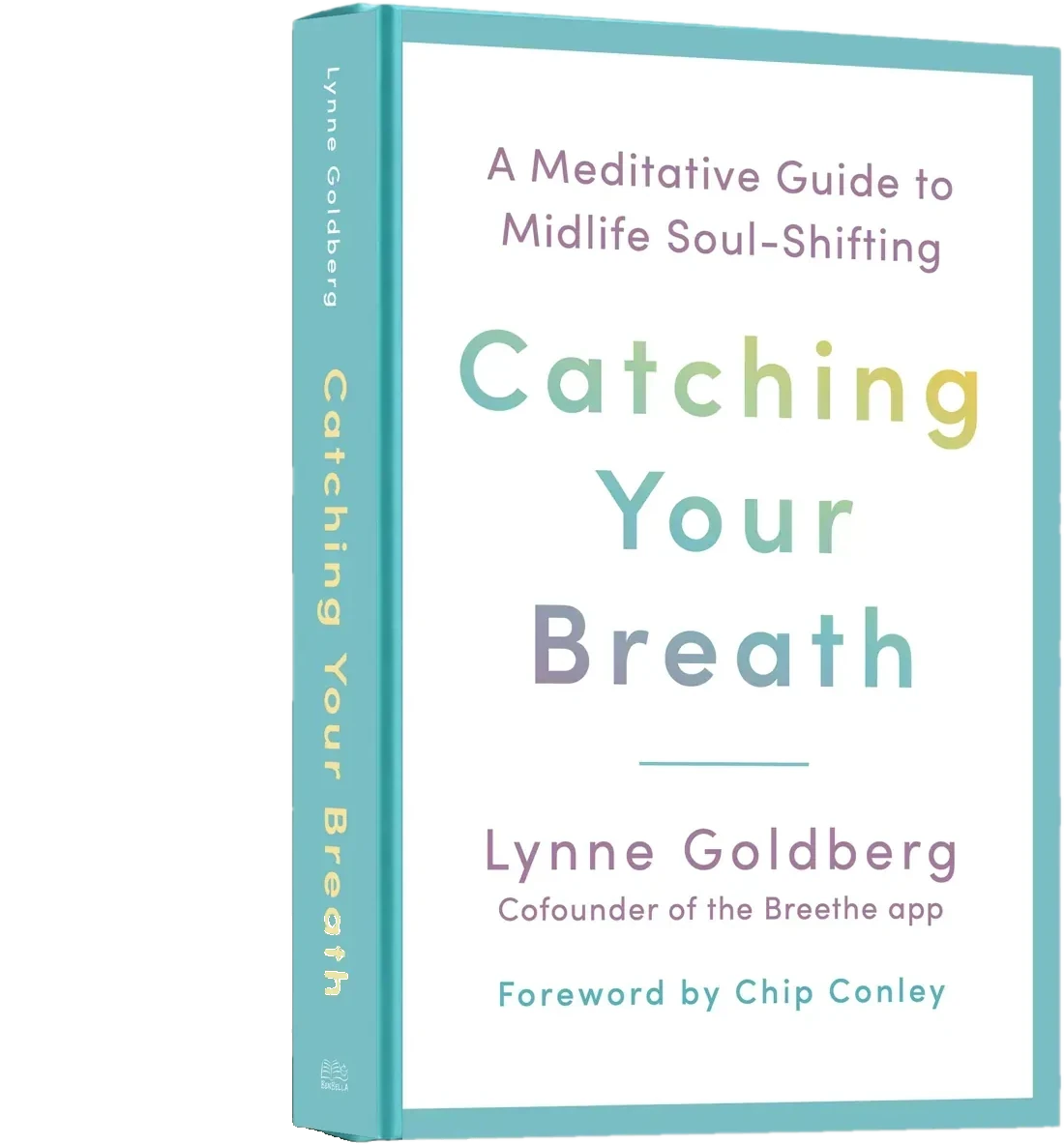
Sign up here for Five Minutes of Peace, a free guided meditation from Lynne. Her seven-night Tired But Wired Soul Shift Sleep Series is a gift when you pre-order her book.