 Lynne Goldberg Meditation

You’re in bed, but you’re still going over that conversation. Then you’re thinking about tomorrow. Then money, work, or what might happen next. Your body is lying down. Your thoughts are doing a full evening shift.
If you’re looking for meditation for anxiety and overthinking, sleep may feel like one more thing you need to figure out. I want to offer a small practice you can try without adding another problem to your list.
Your brain’s not trying to torture you, but it is trying to solve your life.
And bedtime gives it a very quiet room in which to be very busy.
Notice the wheel you’re on
In the third night of my sleep series, I talk about the mind as a hamster wheel. It keeps moving through conversations, possible disasters, and all the things you wish you had said differently.
There can be a wish for control underneath that thinking. Perhaps if you go over it again, you’ll know what to do. Perhaps if you think far enough ahead, nothing will catch you by surprise.
I invite you to notice that wish with kindness. You can understand what your mind is trying to do and still give your attention somewhere else to rest.
I’m just teaching you how to unhook and come back to resting.
You don’t have to finish every thought before you return to your body. A thought can be there while you feel your belly moving with your breath. The practice gives you a small choice in the middle of all that mental activity.
Meditation for anxiety and overthinking: sleep can wait
Tonight, try the thought naming practice from day three. Let resting be the thing you’re practicing. You don’t need to keep checking whether it is making you sleepy.
- Let your body be supported. Lie down with your spine resting comfortably. Place your hands on your belly or beside you. Close your eyes if you wish. Feel the parts of your body touching the bed, without needing to change anything yet.
- Notice your breathing. Take a slow inhale through your nose and a soft, slightly longer exhale through your nose. Do this a few times. Feel your belly rise as you breathe in and fall as you breathe out. Let that movement be a place your attention can return to.
- Give a thought a simple name. When a thought appears, notice the kind of thought it is. You might name it planning, remembering, worrying, or thinking. You don’t need to explain it or follow the whole story. A small label is enough.
- Return on the exhale. After naming the thought, bring your attention back to your belly and the body resting on the bed. Planning, then back to the belly. Worrying, then back to the body. Let this be a gentle loop you repeat for a little while.
- Include the inner critic. If you notice yourself thinking that you keep messing up, name that self criticism. Then offer a kinder sentence as you return to your breath. You might remind yourself that you can be kind to yourself and still grow. There is room for a gentler tone here.
- Let your awareness widen. Feel the weight of your whole body and the quiet movement of your breath. Thoughts may still be passing in the background. Imagine them as clouds, with your attention resting more in the sky. Stay with your body, returning whenever you notice you’ve followed a thought again.
You can leave the future for tonight
Some thoughts are about a conversation that already happened. Others are about a future you can’t see clearly. In the fifth night, I make room for those worries too.
Money. Work. Health. A relationship that is changing. You can acknowledge the subject without opening every possible version of what might happen.
And we don’t need the whole story.
That permission matters when your mind wants to give you the whole story, several alternate endings, and a few extra scenes.
You can use a simple name such as worry or future within tonight’s practice. Then feel the pillow under your head, your shoulders touching the mattress, and the weight of your body.
And you can recognize that you don’t have to solve your entire future tonight.
The worry may still be present. You can return to what is supporting you in this moment, even while uncertainty remains.
Returning is part of the practice
You may name a thought and be halfway through another one before you notice. When you notice, you have another chance to return.
I want that return to feel gentle. There is enough going on in a worried mind without adding an argument about how well you’re meditating.
If sleep trouble keeps going, it’s worth talking with a doctor.
Tonight, you can keep the practice small. Name what you notice. Feel your breath. Feel your body. Come back again when you can.
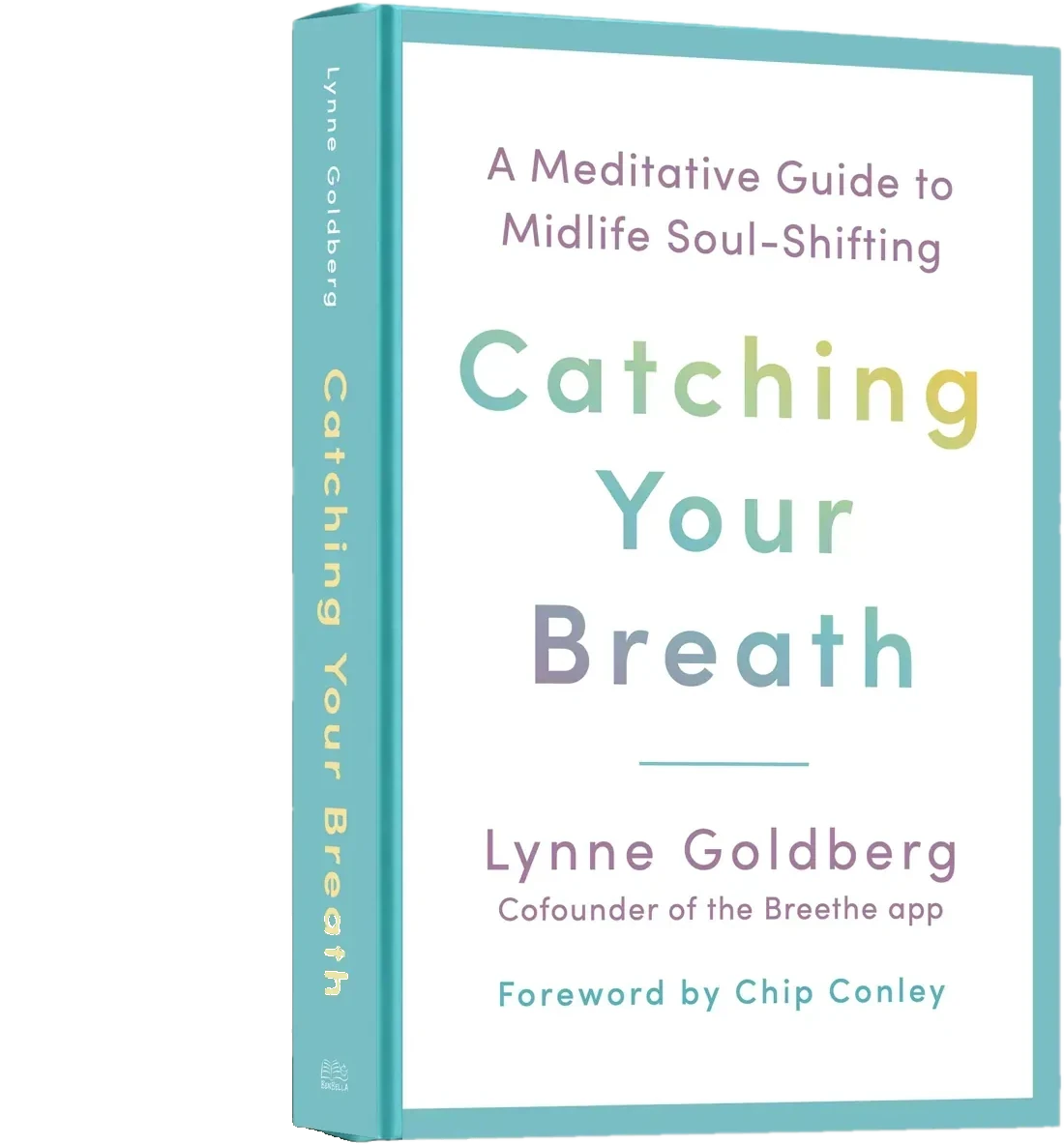
Sign up here for Five Minutes of Peace, a free guided meditation from Lynne. Her seven-night Tired But Wired Soul Shift Sleep Series is a gift when you pre-order her book.