 Lynne Goldberg Meditation

You’re lying in bed, wondering what you’re supposed to do. Close your eyes? Breathe a certain way? Stop thinking? You’re already tired, and now sleep sounds like something else you could get wrong.
You check the clock and start thinking about tomorrow. How tired you’ll be. What you need to get done. Your mind seems determined to get a head start.
When you’ve had trouble sleeping, it’s easy to worry about whether you’ll sleep tonight. You’re awake, you worry about being awake, and soon you’re trying very hard to do something that usually happens on its own.
For this moment, give yourself permission to rest without checking whether it’s working.
Close your eyes and gently move your gaze to the left, then to the right a few times, if that feels comfortable. Let your eyes settle. Breathe out softly and loosen your jaw.
Now feel your head on the pillow, the sheets against your skin, and the bed supporting your body. Notice your natural breath moving in and out.
That’s presence: bringing your attention to what you can feel here, in this moment. The softness of the pillow. The warmth of the covers. The gentle movement of your breath.
When your mind goes back to tomorrow’s list or wondering when you’ll fall asleep, notice where it went and gently return to one of those sensations. You can begin again as often as you need.
You don’t have to get this perfect
In the introduction to my Tired But Wired Soul Shift Sleep Series, I invite you to take things one night at a time. You don’t have to fix your whole life before you begin. You don’t even have to have a clear idea of what resting should feel like.
The first night starts with permission to stop.
We're just telling our body, you're allowed to stop for a while.
You might notice your body settling. You might notice that your mind is busy. You might become aware of a tight jaw you hadn’t paid attention to all evening.
That noticing gives us somewhere to work gently. There is no need to turn it into a score.
The second night of the series is for being awake in the middle of the night. The practice I’ll walk you through here comes from that session. Day one is the night to start with at bedtime.
Guided meditation for beginners: sleep starts with rest
We move attention through the body the way you might turn down the lights in a house, room by room. You give one area a moment of attention, then move on.
When I guide this practice, I say: “Just noticing, not trying to relax anything, but paying attention and then moving on to the next body part that I name.”
Stay where you are and notice support. Lie comfortably in bed. Close your eyes if that feels okay. Feel your head touching the pillow, the weight of your body, and the sheets around you. You don’t need to create a special mood before starting.
Let your breath be gentle. Breathe in through your nose and let the breath out through your nose last a little longer. There is no counting in this practice. Allow your breathing to find its natural rhythm, and notice the simple fact that you’re breathing.
Move through your right side. Begin with your right hand. Notice your fingers, palm, wrist, forearm, elbow, upper arm, and shoulder. Continue down the right side of your chest, waist, hip, thigh, knee, calf, ankle, foot, and toes. Sense that whole side, then let it recede into the background.
Move through your left side. Give the same gentle attention to your left fingers and hand. Continue through your wrist, arm, shoulder, chest, waist, hip, leg, foot, and toes. Notice what is there, then move on. You don’t have to make both sides feel the same.
Notice the front and back of your body. Bring attention to your forehead, eyes, cheeks, mouth, throat, chest, belly, and the fronts of your legs and feet. Then notice the back of your head, neck, shoulders, back, pelvis, legs, and heels. Feel how the bed supports the back of your body.
Let your whole body rest in awareness. Sense your body as one field of sensation. If an image feels helpful, picture a house at night with its lights slowly turning down, or a heavy stone resting at the bottom of a calm lake. Choose one image and let your breath move gently within it. Silently offer yourself permission to rest.
Nothing has to disappear first
When I guide this practice, I say: “If you notice any sensations at all, letting it all be included, nothing has to disappear for you to rest.”
That includes warmth, heaviness, tension, or a place that feels different from the rest. You can notice it without needing to change it before moving on.
Your thoughts may wander too. You might get partway through your right arm and realize you’ve been thinking about work. Gently return to a body part or the feeling of the pillow.
You don’t need to start the whole practice again. There is no missed page to go back and complete. You can simply return to where you are.
If the lake image doesn’t feel useful, choose the house. If neither comes clearly to mind, stay with the weight of your body and your breath. Those are already part of the practice.
Begin again without making it a task
If you wake later, you can notice your head on the pillow and your body resting on the mattress. Stay with the weight of your body and your breath.
I can rest.
It’s a small message you can offer yourself, even when you’re awake. You don’t have to keep checking whether you’re close to sleep.
If sleep trouble keeps going, it’s worth talking with a doctor.
For tonight, let this be a gentle beginning. Notice, breathe, and give your attention somewhere simple to rest.
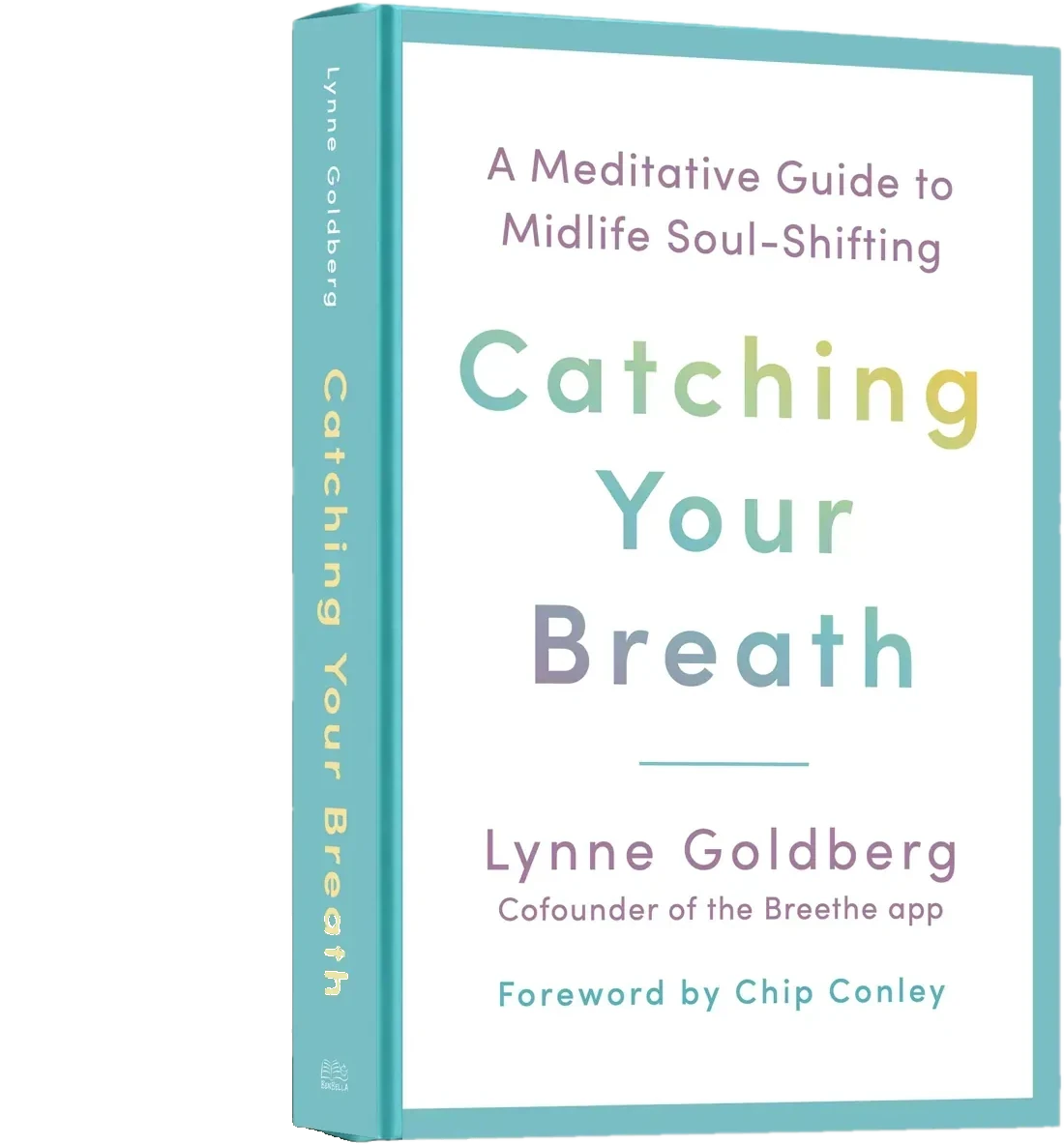
Sign up here for Five Minutes of Peace, a free guided meditation from Lynne. Her seven-night Tired But Wired Soul Shift Sleep Series is a gift when you pre-order her book.