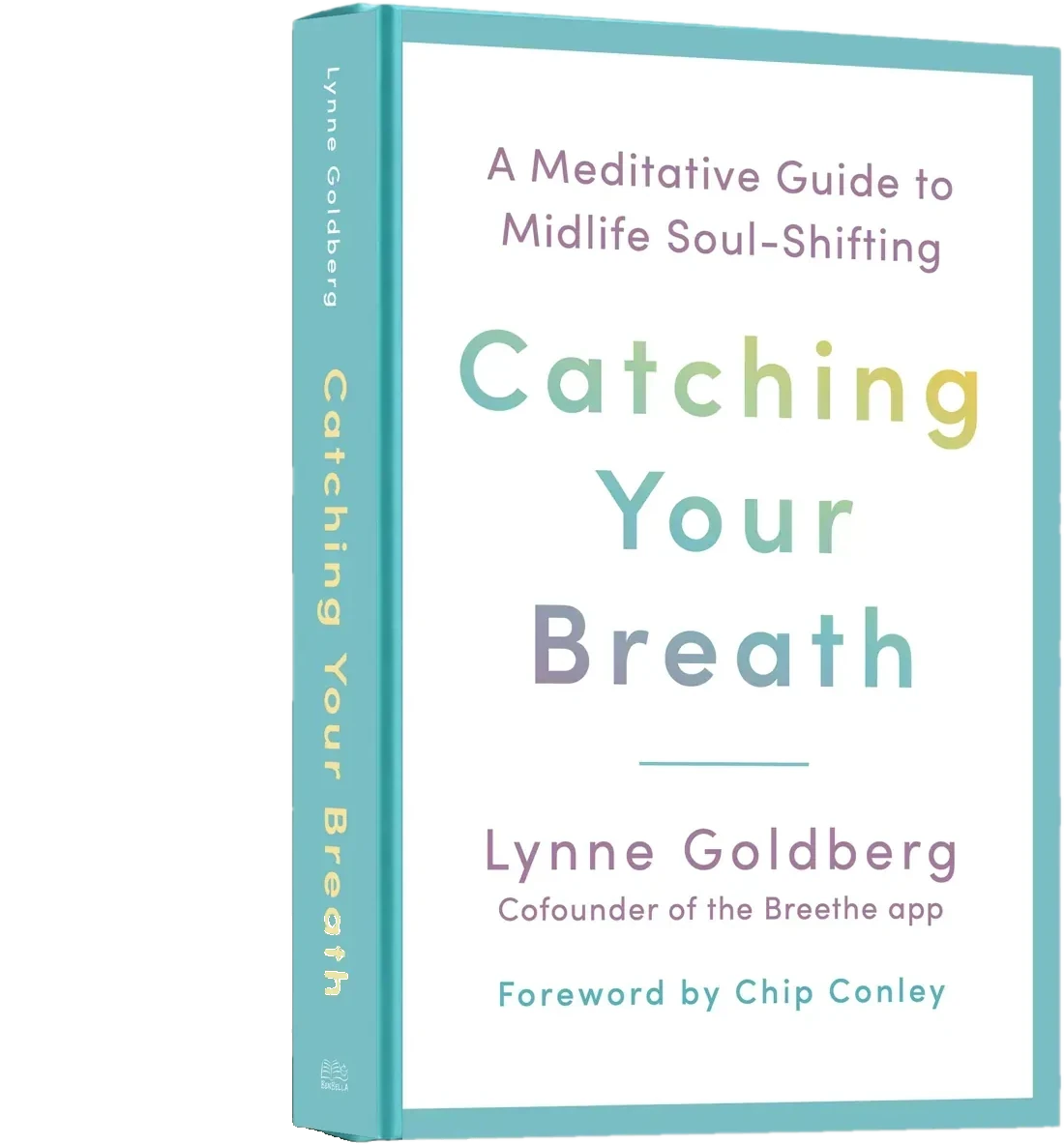
 Lynne Goldberg Meditation

The room is quiet, and you miss someone. Or you’re thinking about the marriage that ended, the role you no longer have, or the life you thought you would be living by now. You’re tired, but the feeling is right there with you.
When I offer meditation for grief and sleep, I begin with room for that feeling. You don’t have to make it go away before you’re allowed to rest.
It’s those surges of feelings that show up when the world gets quiet and your inner world gets loud.
I call these emotional waves. Night can leave very little else to hold your attention, so we begin with what is here.
A feeling can have a place in your body
In the fourth night of my sleep series, I talk about emotional waves. A wave might feel like grief, anger, or loneliness. In your body, it might be a tight chest, a lump in your throat, an ache in your stomach, or a sting behind your eyes.
You may have a clear name for the feeling. You may only know that something feels big tonight. You can start there without needing to explain it neatly.
Grief can be for a person. It can also be connected to the end of a marriage, changes in your health, a lost role, or a version of yourself you expected to be by now.
I invite you to notice the feeling as a wave moving through you. You can give it some attention while also remembering the places where your body is supported.
There is no need to decide how long the feeling should last. Tonight’s practice gives you a way to stay close to yourself while it is present.
Meditation for grief and sleep: two inner rooms
For this practice, I use the image of two inner rooms. One room is for feeling the wave. The other is for resting in your body anchors. You can move gently between them.
- Find a position that feels comfortable. You can lie down or sit. Take a slow, easy inhale and a long, gentle exhale. Notice the surface beneath you. Give yourself a moment to be here before asking anything more of yourself.
- Name the wave simply. Ask yourself what kind of feeling is here tonight. You might name it grief, loss, loneliness, or a big feeling. You don’t have to go through everything that brought it here. Just acknowledge what you notice now.
- Find one place where you feel it. Bring your attention to your body. Perhaps your chest feels tight or your stomach aches. Choose one spot that feels most present. Let your attention rest there gently, without searching for an explanation.
- Stay for a couple of breaths. Notice the sensation as you breathe in. As you breathe out, invite the area around it to soften. The sensation itself can stay as it is. If tears come, allow them. If a sigh appears, give it room too.
- Visit the resting room. When you’re ready, notice your jaw and allow it to soften. Let your shoulders lower a little. Feel your belly and the support beneath your body. You can spend a few breaths here, resting your attention in those anchors.
- Move gently between the rooms. You can return to the feeling for a couple of breaths, then return to your softer jaw, lower shoulders, and the surface beneath you. Let the pace be gentle. Finish by allowing yourself to stay supported while the wave is present. If you want to move, begin by wiggling your fingers and toes.
You can rest while you feel
You’re not shutting the emotion off, just reminding your system that it has somewhere to rest while it feels.
That is the part of this practice I want to keep close. Visiting the resting room doesn’t mean you have stopped caring. You are giving your attention a place to settle while the feeling is still allowed to exist.
Perhaps your jaw softens, but your chest still aches. Perhaps a tear comes after a quiet breath. You can include both experiences without deciding that one means you’re doing well and the other means you’re doing badly.
The two rooms are there for you to visit. You don’t have to stay with the strongest sensation the whole time. You can return to the bed holding you, then see what feels possible next.
So you can’t choose whether loss shows up at night, but you can choose not to abandon your body whenever it does.
I offer that as an invitation to keep yourself company, gently and without pressure.
Let this be enough for tonight
You don’t need a tidy ending to the practice. You don’t need to feel cheerful or decide that the grief has moved on.
If sleep trouble keeps going, or the feeling ever gets too heavy to carry alone, it’s worth talking with a doctor or someone you trust.
For tonight, you can notice a feeling, take a breath, and return to support. You can allow the wave to move while staying close to yourself. That is enough to practice in this quiet moment.
Sign up here for Five Minutes of Peace, a free guided meditation from Lynne. Her seven-night Tired But Wired Soul Shift Sleep Series is a gift when you pre-order her book.