 Lynne Goldberg Meditation

This is the same short practice I give people when they join my list, written out here so you can try it right now. Your mind can be as busy as it likes, and you can do it anywhere you can sit, even in the car before you walk into something hard.
Just five minutes. That’s all you need.
Why five minutes is enough
For years I was what I called an emergency meditator. I would wake up at three o’clock in the morning and meditate myself back to sleep, but it wasn’t a daily practice.
Meditation isn’t powerful because you do it once; it’s powerful because you return to it again and again.
Even five minutes tells your body it’s safe to slow down, and it gives you a little space between what’s happening and how you respond to it, which is where real choice begins.
The practice
Read it through once, then try it with your eyes closed or softly lowered. If you’d like me to guide you, the recorded version is free: just add your name and email in the box on this page.
- Settle in. Let yourself settle into whatever surface is holding you. It might be your chair, a bed, or a sofa. Notice where your body makes contact with it, and let yourself fully arrive.
- Listen. Notice the sounds around you. The nearby sounds, and the faraway sounds. You don’t have to do anything with them. Just let them be there.
- Find your breath. Begin to notice your body breathing. As you breathe in, feel the air as it touches your nostrils. As you breathe out, notice whether the air feels cooler or warmer.
- Name it, gently. As you breathe in, silently say to yourself, breathing in. As you breathe out, silently say, breathing out. Stay with this for a few rounds.
- Count to five. Now try it on your own. Each breath in and each breath out counts as one. See if you can reach five.
- Come back, as many times as you need. If your mind wanders off in thought, that’s normal. Don’t judge yourself as being good or bad. Just come back to the breath, breathing in and breathing out.
- Close with thanks. Let your breath deepen a little, and thank yourself for taking this time for you.
When your mind won’t settle
If you feel like you can’t turn your mind off, I was you. I could not turn my brain off. A busy mind is normal, and meditation is a skill you train, so every time you notice you’ve drifted and come back, that’s the practice.
When I meditate, I’m simply aware of everything I’m experiencing, whether I feel relaxed or not. Some days five minutes feels peaceful and some days it feels like sitting in a room full of chatter, and both of those days count.
Good moments to try it
- First thing in the morning. Start your day before your phone starts your day. Five quiet minutes of breathing before you check anything can change the tone of the hours that follow.
- Before a hard conversation. A few breaths can be the difference between reacting and choosing how you want to respond.
- When you feel overwhelmed. Pause, take a few slow breaths, notice your body, and ask yourself, “What is the next right step?”
- At night. If you’re tired but your mind won’t stop, my sleep articles go further, like sleep meditation for menopause and what to do when you’re overthinking at night.
Questions people ask me
Do I need a special place or setup?
No. What you need is your couch, and you need to sit down. Anywhere you can be still for a few minutes will do.
Is it okay if I fall asleep?
If you fall asleep, your body may simply need the rest. The aim of this practice is to stay awake and aware on purpose.
How often should I do it?
Every day if you can, but don’t make it a test you can fail. Sustainable habits almost always outperform perfect intentions. Start where you are, be willing to be a beginner, and keep showing up.
Where this can take you
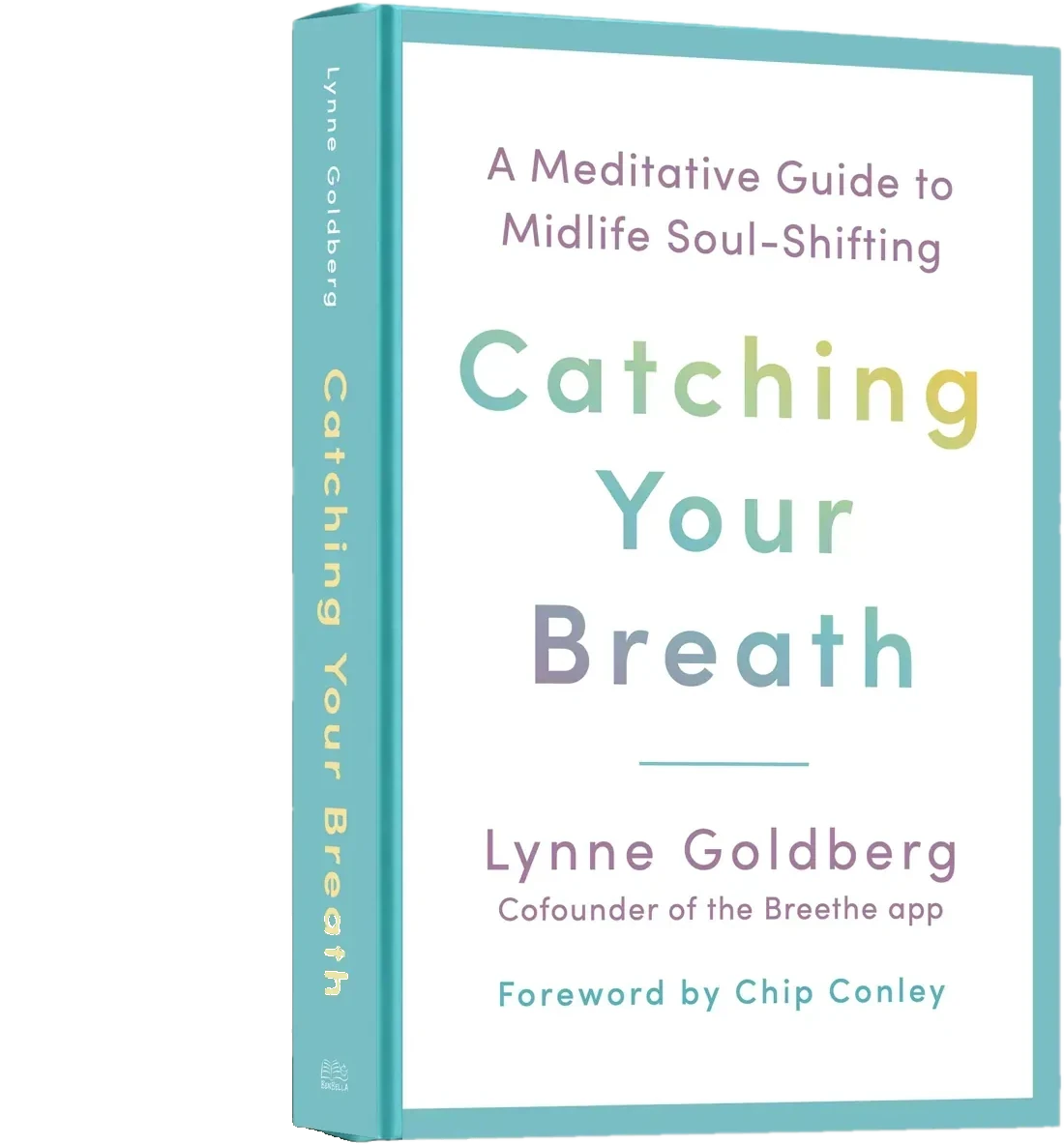
That small space you find in five minutes is where my work begins. I call it choicefulness: noticing the pull of an old pattern and recognizing that you don’t have to follow it. It’s also the heart of my book, Catching Your Breath, for anyone facing a big change and asking what comes next.
You can do this. Let’s begin where you are.