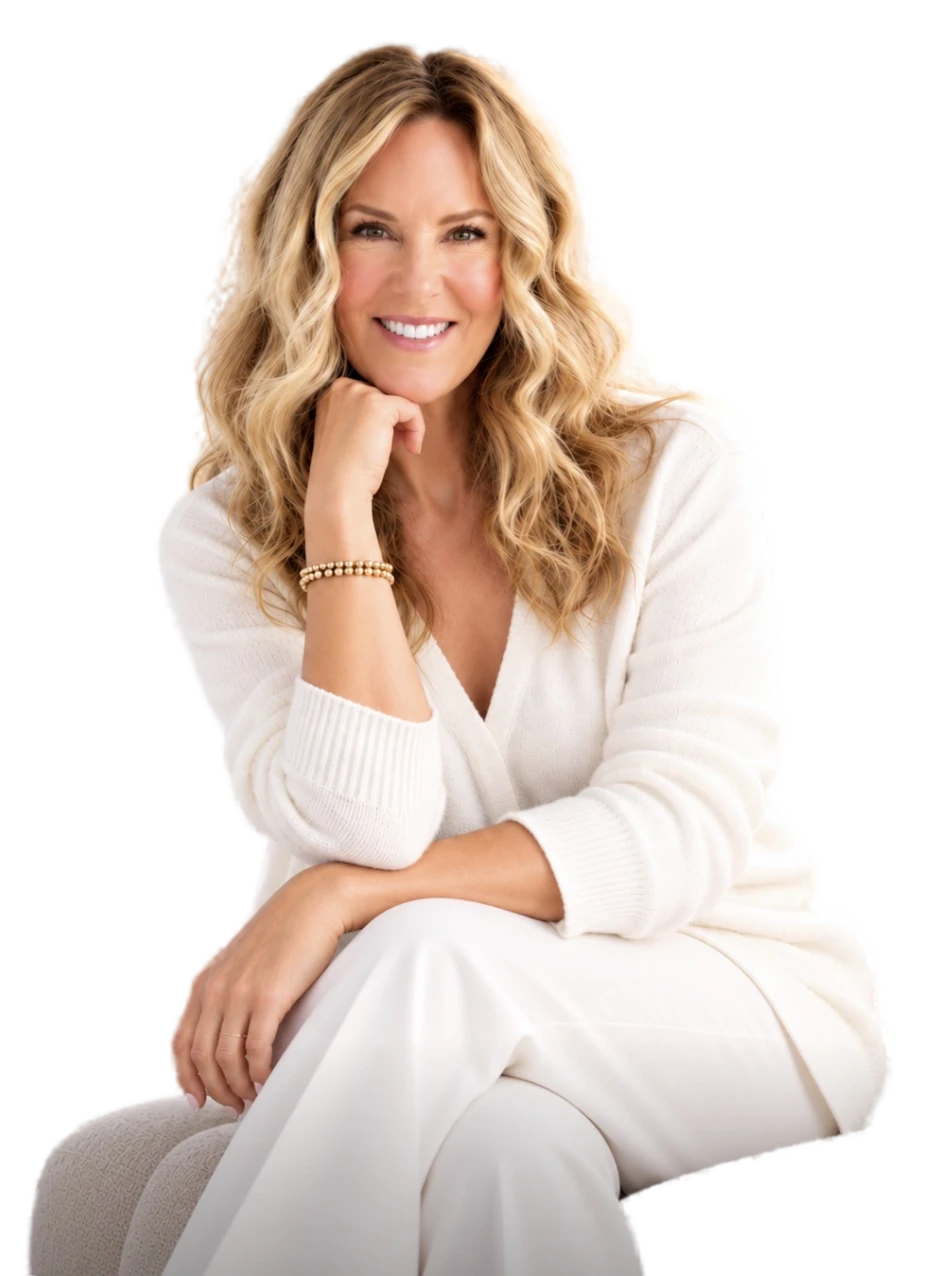
 Lynne Goldberg Meditation

On The Midlife Rebel Podcast, Lynne talks about meditation, breaking old patterns, embracing menopause and sexuality, and finding meaning through midlife change.
Highlights
- “When you notice that your mind is wandering, you come back to the breath.”
- “I always say if you can do five minutes, five minutes is better than no minutes.”
- “And one of the greatest things about being an elder is that we get to teach our children.”
Transcript
[The host introduces Lynne and reflects on midlife as a powerful stage rather than simply a crisis.]
Lynne Goldberg: I think that idea of a crisis is such an interesting way to describe, the word crisis in Chinese really is opportunity. And I think what's so exciting about this opportunity that we're given is that up until now, we've been following societal rules. And we've really truly been honoring our parents' voices in our heads or our teachers' voices in our heads. And we've just been checking all those boxes. And it's so exciting when you get to a stage in your life where you say, hey, I'm a grown-up and I don't have to do that anymore. And that opportunity to not follow everybody else's rules, to not check the box on being the good girl in my case, or so many other rules that we follow, is such an exciting time. It really is.
Lynne Goldberg: And a lot of people go off to Bali or they buy themselves a new car or whatever it is that they decide that they want to do. And that more meaningful coming inside ourselves and really being able to evaluate what really lights us up is, to me, that opportunity.
[The host asks how to recognize the opportunity when midlife feels confusing and turbulent.]
Lynne Goldberg: I love the word aware because, of course, as a meditation teacher, that's what is so important, that sense of being aware on purpose, moment to moment. That's what we practice all day long. And if you're really truly practicing mindfulness, to me, that sense of awareness of taking yourself outside of the story, not being caught up in the whole drama of it all and just observing, oh, amazing. This is definitely a tornado. And can I be in the center of it as opposed to on the periphery?
[The host asks whether Lynne began meditating before or during midlife.]
Lynne Goldberg: I feel so blessed because I've had several opportunities to really practice. Before midlife, I was pregnant with twin girls and ended up losing them. I lost them at six months. So I did give birth and I did hold them and have them alive for two days. And so I did have that loss. And then shortly after that, my marriage broke up. That was a 15-year relationship. And there was just so much grief and two people who just didn't know how to really help one another and ended up really rubbing at each other as opposed to holding on to one another. And then my mom was diagnosed with cancer and she ended up passing away. And then right after that happened, I lost my job.
Lynne Goldberg: So I was blessed in the sense that I lost all my identities. I was no longer a wife, no longer a mother, no longer a daughter, no longer the businessperson that I saw myself as. And I had been dabbling with meditation at that point. I think I started dabbling with meditation when I was trying to get pregnant initially. And of course, at that point, everyone just kept saying, just relax and everything will be fine. And so meditation had already been a part of my life and I had used it, but I was more what I called an emergency meditator. So I would wake up at three o'clock in the morning and I would meditate myself back to sleep, but it wasn't a daily practice that I honored.
Lynne Goldberg: And then when everything fell away and I was left with me, I was lucky enough to have something that helped ground me and helped give me a sense of solace and also helped me recognize that I could find some peace in the middle of all of it. And that was really useful for me. And then I started teaching meditation. So I started studying, I started teaching, and then obviously founded this app because I was so excited about this tool that I had that I thought, oh my God, if I could teach my children how to do this, what a gift that would be for them. And they didn't want to learn from their mother. So I had to find other people that I could teach so that they could teach my kids. And so that's how I was lucky enough to start this app.
Lynne Goldberg: And then from there, ended up having many blessed years of this wonderful practice until at the age of 59, my marriage fell apart for the second time. And I was very blessed and I had gotten pregnant and had a child, and I was very lucky to have had this whole other life. And as life does, it's sort of this idea of, well, I think you have more to learn here. There's a growth edge that we're missing. And so I was excited slash left in a sort of, I would call that liminal stage between. So you learn what it is that you've been doing all those years. And then as the onion layers get peeled away, you get deeper and deeper.
Lynne Goldberg: And I was very fortunate that I did have this skill that I knew how to use, because in the second end of the story I ended up getting diagnosed with cancer and then had a second recurrence, and then my daughter went away to school. And of course I was in this long-term, 20-year marriage at that point that had just ended. And so again, I had had the same experience, but 20 years later with a lot more wisdom. And I feel that the skills that I've really honed at this point have been so helpful for me that I'm like, hello, everybody has to. You need to know this stuff. This stuff works because when you are facing adversity or trying to figure out how to navigate some of those real life and death situations, it's great to have some stuff that you can fall back on. So short answer, yes, I had skills. Longer answer.
[The host reflects on how those experiences tested Lynne's trust in what she had learned.]
Lynne Goldberg: That trust, and I feel so blessed because the first night that I remember when my ex had left and I was lying alone in bed, and I had just had this cancer diagnosis and I was really terrified. I can't think of another word to describe that existential terror. I'm going to die and I'm going to die alone. And then I was able to say, well, that's future tripping. That's not happening right now. You're in a bed. You have sheets. You have a roof over your head. You're alive. Nothing is happening to you at this moment. And so I was able to really stay present.
Lynne Goldberg: And then I was very lucky to resource, and when I started to really offer myself compassion and love, that feeling of, oh, that's all there is. It was overwhelming. I felt like I had just jumped into a sea of love and there was nothing but love inside of me, outside of me, everywhere. And it was the most magical experience. And it was not just trust the universe. It wasn't a conscious choice to trust the universe. It was a felt experience of this is who you are. You don't have to look. This is you. And it was the most breathtakingly beautiful experience. I don't think you get moments like that unless you're in a sort of existential state.
[The host asks whether Lynne believes souls choose their experiences.]
Lynne Goldberg: That's such a great question, and I have no knowledge of that, so I wouldn't be able to say that with any sort of authority. I have a sense of trust that everything has been designed for our growth. And so if you believe that you are a soul that has an evolutionary path, then I suppose that's one explanation. I'm not certain. I certainly do believe that the universe itself is constantly expanding. We're all in an expansive state. We're always growing. And if you think about life and love, one plus one is three. It's that evolutionary expansion. So do I believe we're meant to? Of course I do. And I think it's a reflection of all of us. It's not me growing here as one individual soul.
[The host asks Lynne to share more about her cancer experience.]
Lynne Goldberg: The first time I was diagnosed, it was just like a casual, I'm in the shower and somewhere mid-shampoo I discovered a lump. And that was the, oh, this doesn't feel right. And then that experience of having all the tests and all of the emotional upheaval that goes with it is disconcerting because we're in that period of uncertainty. And I think for all of us not knowing is really challenging. There was a science experiment that was done on rats where they were shocked. Have you heard of that?
[The host says she thinks she has heard of the experiment.]
Lynne Goldberg: I find it so incredible because they preferred being shocked regularly, knowing that they were being shocked on a regular basis, to not knowing when the next shock was going to come. And I found that to be so exceptionally interesting because, of course, we're all rats, right? We don't know when that next little shot is coming. And as that happens to us, of course, the sensation is, I want to hold on to something. And as humans, we can be certain of one thing. There's actually nothing that is certain. So it was just a fascinating explanation for uncertainty for me. It was, okay, this is really what liminal space is.
[The host reflects on how people create stories to make sense of what's happening.]
Lynne Goldberg: I think our lives are a series of stories. And if our story matches our reality, great. And if it doesn't seem to fit, now we're thrown into a tizzy.
[The host observes that awareness can help people create a different story.]
Lynne Goldberg: And I just love that feeling because that's the one thing that we actually can have agency over. And so that sense of, I've got a lot of control here, depending on what story I tell myself. I think that that's beautiful. And I'm not saying slap an only good vibes sticker over stuff. I'm not saying that at all. I mean just, hello, why would you tell yourself over and over again, I'm going to die alone? It serves absolutely no purpose. Why would you say that? So I find that just catching yourself in that moment while it's happening is a skill you can learn. And I think that that's what you can do. You can catch yourself.
[The host describes midlife as a long unfolding journey and mentions studying astrology.]
Lynne Goldberg: Tell me more about what you mean because that sounds really interesting.
[The host asks which aspect Lynne would like to hear about.]
Lynne Goldberg: In the astrology sense. How does that relate?
[The host explains the idea of planetary cycles during midlife.]
Lynne Goldberg: You're the second person that told me about this, and I love it. I love that when things come up a couple of times.
[The host describes several astrological cycles and the different ways people may experience them.]
Lynne Goldberg: What I really appreciate about that is that it's an explanation for these experiences that we all share. They're universal experiences. And I think that we all have the sense at a certain time in our mid-20s that we have to take a little bit more ownership over our lives. And we certainly get to a certain age where there are those moments of, oh, I'm repeating the same shit over and over again. Am I still going to keep doing this or do I want a new way? And I think that James Hollis writes about this. Lao Tzu wrote about this idea of the wanderer. I think there's so many representations of the idea of getting to a certain part of our lives and recognizing that, okay, the old stuff isn't working. I've been doing it, but it isn't working. And these wounds are driving the bus.
Lynne Goldberg: They haven't perfected auto-driving yet, so until that, I'm going to take a little bit of ownership over my GPS route. And I think that's important. I think that when we start to really understand and recognize that we have the ability to stop ourselves mid-pattern and choose another way. That is obviously something that astrology recognizes, but so many other philosophers, psychologists have been talking about this for the ages.
[The host compares recurring patterns with a reminder to grow and take responsibility.]
Lynne Goldberg: I think that idea of being aware and awake and not allowing the below-the-line thinking to be motivating your decision-making process. There's this idea of conscious choice-making and what the Eastern mystics called karma. All that karma actually means in Sanskrit is action. And when we take action, but we take action from an old memory, which is what that conscious cycle does. You have a memory and then you take action based on that memory. Well, when you're taking anything from the past and making that your future, you're enabling the pattern to continue. That's what's perpetuating the pattern. So this idea of stopping the pattern by not allowing that memory to perpetuate into your future is conscious.
[The host asks about the skill of becoming aware and suggests it may not happen for everyone.]
Lynne Goldberg: I think it's absolutely possible for every single one of us to have that. And I think that that's what I want to help people recognize, that feeling of powerlessness that we sometimes have because, oh, why do I keep going for the same guy? We all do that. And we all do it and we all feel crappy about ourselves because there's this feeling of not having progression because we keep going backwards. And I think that if we're in that growth state that we're all evolutionarily designed to be in, that part of that skill, and it's teachable and it's learnable and it's not hard, is learning how to pay attention on purpose in the moment.
[The host asks whether this means stepping outside the experience and observing it.]
Lynne Goldberg: That's all it is. That's exactly what it is. If you want to make it the most simple, and I wrote an entire book about this, so I don't think it's as simple. I think there are steps that you can actually do. But if I'm going to simplify it in its most concrete way, I think it's paying attention. And what we do when you meditate is you choose an object of your attention, your breath. You pay attention to it on purpose. When you notice that your mind is wandering, you come back to the breath. That's all you're doing over and over again. That's strengthening that attention muscle. And the more you do that, the more you can notice, oh yeah, I just took a little detour. Oh, my fantasy has me off in Bali, or I wish I would have said, or all those should have, could have, would have, all that.
Lynne Goldberg: And when you start to notice, that's what the game is. And it's not more complicated than that. A lot of people make it really complicated. It's not that hard. And I think that getting to the place where you can become awakened, people talk about it as if it's somewhere off in the great distant future. You could do it right this second.
[The host asks about the long-term purpose of meditation and whether it leads to something beyond awareness.]
Lynne Goldberg: It depends on the individual. I think when you really look at what meditation is designed to do, it's so that you learn yourself. And of course, what is the self? And the more you expand on that, it's fascinating. I can do 17 interviews on this whole thing, but I think that that's really what meditation helps you recognize, is hey, I'm not this one little person. As you said, astrology for you has shown you movements that are planetary. We are not just us. There are millions of stars, trillions of stars. We are part of something magical and mystical and universal. And we all share it. And we all share the same DNA, except for like 99.9% of us is the same as everybody else. So this idea that we're somehow just little me and that I'm alone in this great universe, no, don't buy that.
[The host asks what other insights Lynne has gained through midlife.]
Lynne Goldberg: I am on a whole new trajectory. Midlife is the beginning. And now I'm in this other sort of state, which is equally magical and equally wonderful. And what I'm really interested in is how you evolve and grow and how something that happened at 39 is not the same as something that's happening now. But I think that there's a lot of people who are experiencing the same sentiments. And I think that that's what's really interesting. I think there are many women who have been invisible. There's this sense of being invisible because we don't look the same way that's been revered in a youth culture.
Lynne Goldberg: But there's also the invisibility of our medical history and the sense that you go into a doctor's appointment and you have all these symptoms and you're saying things that are very real. And most physicians aren't trained to understand that those are hormonal fluctuations and changes that are actually causing serious changes to your body. And I think that as women are talking more and more about this, and as our voices are getting louder, that actually brings a tear to my eye because there are so many voices that are saying, hey, I'm tired of this. And I am not willing to be so small to make others feel important.
Lynne Goldberg: And I think that's what I call menopause. It's that pause where we really determine what it is that we want for ourselves and we give birth to ourselves because we've given birth to lots of other things at this point in our lives. By the time we hit menopause, we've taken care of kids and we've taken care of our husbands and we've taken care of all the stuff, all the labor force that we don't get paid for. And we get to a certain stage and we say, hey, I'm here too. I matter. And I think that that's the most exciting thing that is collectively happening for so many of us right now.
[The host reflects on how menopause is often treated as something to fight, and how it could be appreciated as a change.]
Lynne Goldberg: When you really consider, and I write about this in a lot of detail in my book, but this idea of just being our surface level and that's who we are. And I think that's our culture today, so it's not our fault. We are taught that we are only as good as our bodies and our physical appearance, and we're not trained for ourselves to resource our value. And I think what's very exciting is that when we start to look at who we are, not as this physical body but as something bigger than that, there's such a sense of appreciation for the life's journey that we've now had and the wisdom that we've accumulated and the sense of maternal love that we've been able to offer. But then that also we get to nurture and honor ourselves. And isn't that a special time in our lives?
Lynne Goldberg: It's beautiful. And if it's used correctly, what I find so exciting about it is it can become the best trajectory for the next best life that you could possibly have. If you feel in your brain, and this is such a psychological thing, but if you believe that you are only as good as how you physically look, first of all, your body will wear out. That's just a fact. So how you honor yourself and what you do for yourself, that you can do something about. What you are dealt with and the genetics that you might carry, you can still do something. Your gene expression is largely dependent on the habits and the mindset that you have. And isn't it exciting that you can actually take care and honor and nurture yourself? And then by doing that, look what you get to do for humanity. It's not just about yourself. You get to really embody this wisdom and expand your wisdom and collectively rise. And I think that's so exciting.
[The host observes that Lynne has become a guide for others.]
Lynne Goldberg: I think it's a responsibility. I think we all have different stages of our lives. My mom passed away when I was young and I sought out women who were my mother's age and older because I recognized that there were things that I didn't have to actually physically do. I didn't need to make the same mistakes that I was going to. I could ask people how to avoid that pothole. I didn't need to actually go fall into it. And I think that now I'm at that age where I get to return the favor. Hello, why wouldn't I?
[The host asks whether women are returning to a traditional role as wise elders in their communities.]
Lynne Goldberg: I love that, and I think that's entirely true. And I think that recognizing how powerful we are in a very loving, different way is part of our feminine. When I say feminine energy, I'm not specifically talking about being female genetically. I'm talking more about the energy that comes from that nurturing, compassionate, intuitive, loving energy. And I think that that's being honored more than it has been up until now. I think up until now, there's been this power over, this domination, this kill-or-be-killed fight type of energy, and it hasn't gotten us or our planet very far, has it? So I think that it's exciting to see this evolutionary shift that's happening and be a part of it.
[The host asks about feminine power and sexuality in midlife.]
Lynne Goldberg: I think again, evolutionarily, when you look at how women are raised, and rightly so, because there are so many things that can happen to a woman based on her physical body and it could destroy a career. It could destroy her life, really. You get pregnant at 14, innocence, all of that. So there's this real protective nature that we have, or that society has had, over women from enjoying sex. Good girls don't do that because, God forbid, you get pregnant, then what? So I understand it from a human evolutionary perspective. But from a pure physical enjoyment, we've been shamed for enjoying something that is pleasurable and beautiful and has nothing but joy.
Lynne Goldberg: How lucky are we that we get to be our sovereign queens? That's what we get to be. And when we hit menopause, we don't have to worry that we're gonna get pregnant, do we? And isn't that lucky? And now it's just about pleasure, the only reason. And there's a reason that we still get to have pleasure after we don't get to reproduce any longer. Our pleasure never goes away. Lucky, lucky, lucky. So I'm a big believer in recognizing what it is that our sexuality can help us uncover about ourselves and deciphering how and what turns us on and going for it because, hello, you don't have an indefinite amount of time on this planet. And if you get to have a good time while you're here, let's go for it.
[The host asks how hormonal changes and reduced libido fit into that experience.]
Lynne Goldberg: I think that there's this difference. I'm going to call it a slow burn as opposed to a firecracker. When you're in your early 40s, oh my God, I was so horny all the time. So good. And it was so much fun because a man had to walk by me and I'd be like, and that was a totally different excitement. But I think that when you get to a certain age, it takes a bit of time to get the pilot light on, but then it doesn't extinguish. And so I think that it's just working with your tools differently. And I think that that's just knowing yourself, another way of knowing yourself and taking responsibility for yourself and honoring yourself.
[The host asks whether body image affects a woman's ability to embrace changes in her sexuality.]
Lynne Goldberg: So give me more of a flavor of what you mean by that.
[The host clarifies that she means accepting bodily changes rather than resenting them.]
Lynne Goldberg: There's this sense I think that many women have. There's an exercise that I do that if you ever ask a woman to look deeply at herself in the mirror, very interesting to do because some women just can't. Or when they do, they look at themselves and they notice all the things that are wrong. And I think that that is part of how we're raised. We were raised to look at what's wrong, and it was for our survival. It's the negativity bias. We are programmed to look for that. And I think that when we stop looking for what's wrong and we start paying attention to what's right, it's a whole different shift. And I think that that's again a practice. It's just a practice.
[The host asks how purpose and meaning can evolve during midlife.]
Lynne Goldberg: I think that that's one of the purposes. I talked about the opportunity of midlife. And I think that is one of the reasons that we get to a certain stage and why these different events that happen can be seen as those opportunities. Because I think that we often mistake security, safety, tradition with this feeling of, I'm going to keep myself okay. And I think what ends up happening is that midlife shows us that that isn't really true because some things can actually happen even though you followed all the rules. And so then you have to rediscover what it is that actually gives your life meaning and purpose. And isn't that a gift?
Lynne Goldberg: And there's many different ways that you can do that. And I go into that again in the book. It's so rich a topic. But I think being able to find what it is that we value is one of the luckiest things that we can do. And then if we're even luckier, if we can then share it. And one of the greatest things about being an elder is that we get to teach our children.
[The host asks about the growth of Breethe and whether that success felt like a sign of being on the right path.]
Lynne Goldberg: I like to think so. When we started the app, it was something that was done from my own personal desire to help my kids. And then once it was my kids, then it might have been their friends, and it sort of escalated. And I saw this feeling of, oh, maybe I can help more people with this. And so, yes, now we've been downloaded 20 million times and translated into I don't know how many. So I feel like this is a beautiful gift that I was given and that I get to then share with other people. And I hope that I will always continue to be creative because I think again, when we talk about what the universe is, the universe is a creative process. We're always in a state of renewal. That's what we are. We are constantly rediscovering, renewing, regenerating. Otherwise we're dead.
[The host asks about the book's release.]
Lynne Goldberg: It's a year away. It'll be 2027. So maybe you'll have me back before then. But I'm really excited. It's something that was hugely helpful for myself. Again, I think that I selfishly was looking at how I could make sense of certain things and unpeel this onion. And so as I was unpeeling the onion, I went around the clock again, and it just was a whole other experience and it was fantastic. Writing the book, that experience, one of the best experiences of my life. If I had to say one thing that I enjoyed more than any experience, this was definitely high on my list of things that I just loved, absolutely loved.
[The host asks how the writing unfolded.]
Lynne Goldberg: I'm going to say something that might sound crazy to you. I honestly felt like this was ghostwritten.
[The host says that doesn't sound strange to her.]
Lynne Goldberg: I feel like I was just blessed. And I feel like I would wake up at five o'clock in the morning and I couldn't wait to sit down and start. And I lost all track of time and space. And at the end of the day, I'd go, oh my God, how did that happen? And that was my experience. And it was exceptional. The universe gave me gifts everywhere, just everywhere. People contributed. People were willing to be interviewed. I met some of the most outstanding people in this field because I was so blessed by so many people. So I feel like it was just divinely, it happened.
[The host asks what Lynne's daily meditation practice looks like.]
Lynne Goldberg: I am always reluctant to answer this question because I don't want people to feel like they have to be super achievers. I always say if you can do five minutes, five minutes is better than no minutes. If you can do 10 minutes, great. What I like to do is first thing in the morning when I wake up, the first thing I do before I do anything else is I have my practice. And that can be as short as 20 minutes. Sometimes it could be an hour. It just depends on how much time and where I am and if I'm traveling and all that kind of stuff. And then I have a yoga practice. Sometimes I don't get to practice yoga. Sometimes I'm running and I have no time. I try to stretch and do a little bit of my practice every day.
Lynne Goldberg: And then again I meditate at the end of my day as kind of like a bookend to my day. And I find that really useful. I find it helps me settle. It helps me recognize where I might've fallen. I have this sense of being in this field of love. And when I lose that field and I'm not connected to it, I try to reconnect to it. So I look at where I left that field throughout the day. And if I'm lucky enough, then I can catch myself in the moment. But if I didn't get to catch myself in the moment and I'm reflecting back at the end of the day, then that's another opportunity for me to reconnect. And so for me, that's a really important time as well. And I feel like that is my minimum practice. That's like, I'm not whole, I'm not okay if I don't get to do that.
Lynne Goldberg: And then, of course, I spend a lot of different times within the day using all these reminders, as every time they go off, it's an opportunity for me to breathe and be centered or to just pay attention. I find that really useful.
[The host asks whether ideas for the book came during meditation.]
Lynne Goldberg: I've had that experience. I find that my most exciting times is when I'm actually sitting down and actually writing. And it's just remarkable because I don't speak that well.
[The host compliments Lynne's speaking.]
Lynne Goldberg: But I find that things come out of me, I'm like, oh yeah, or I'll make a connection that I haven't quite been able to articulate. And then that to me is, whoa, where's that? How cool is that, right? And that's what I mean by a real download. It's exceptional.
[The host reflects on the natural flow of the writing process.]
Lynne Goldberg: And so yes, I've had too many things happen along the way of writing this that have been so fortuitous. And I never would have started writing this book if I hadn't had those things happen. So I kind of feel that that's right. Well, we'll see, right? Who knows? To me, this was one of the most wonderful, enriching experiences. So I feel lucky.
[The host asks where listeners can find Lynne and her work.]
Lynne Goldberg: I have a website that's LynneGoldbergMeditation.com. So I'm there too. You can find me lots of places, all over the place.
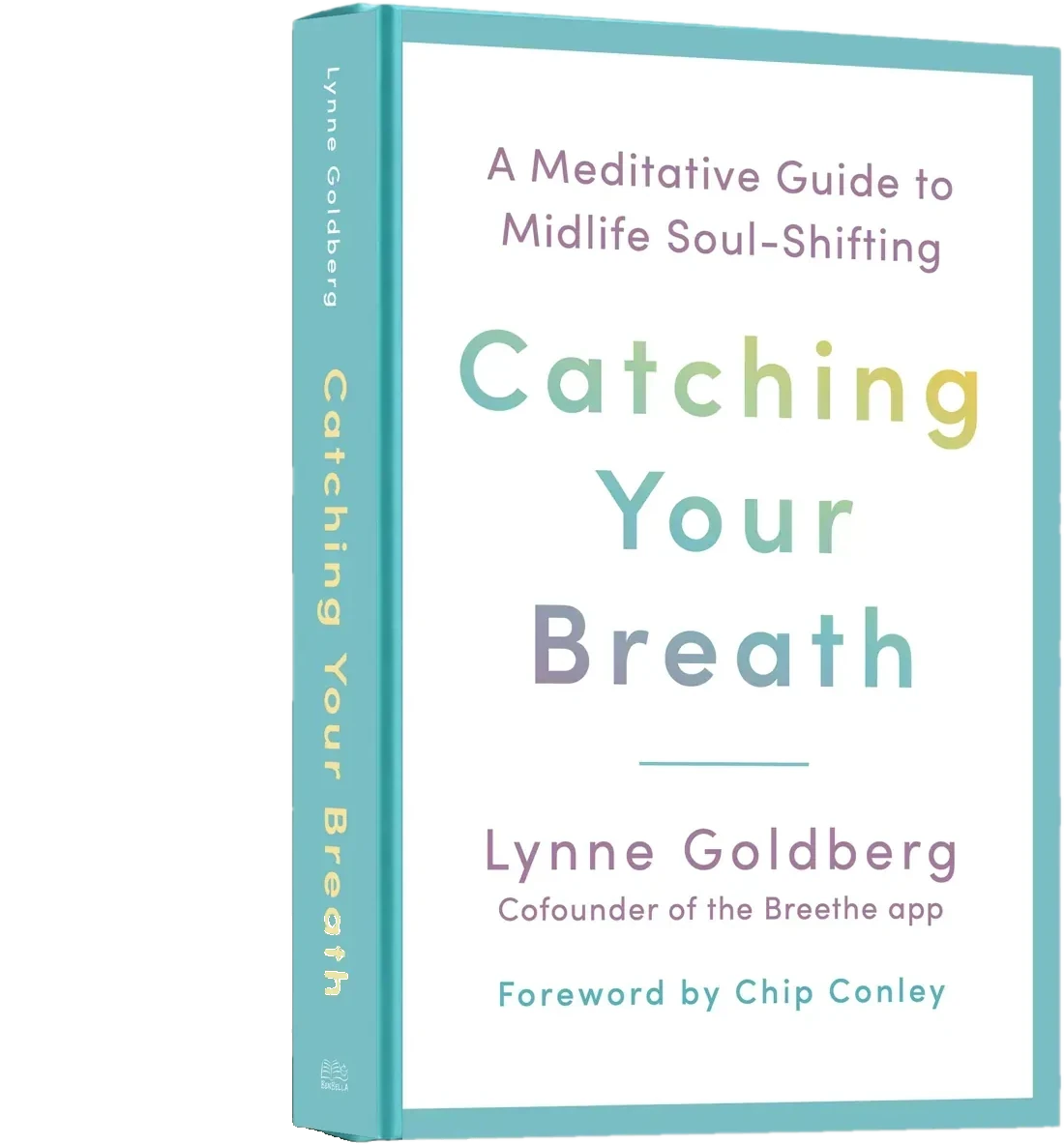
The book
Catching Your Breath
Lynne's new book, on meditation, choicefulness and the changes life brings.