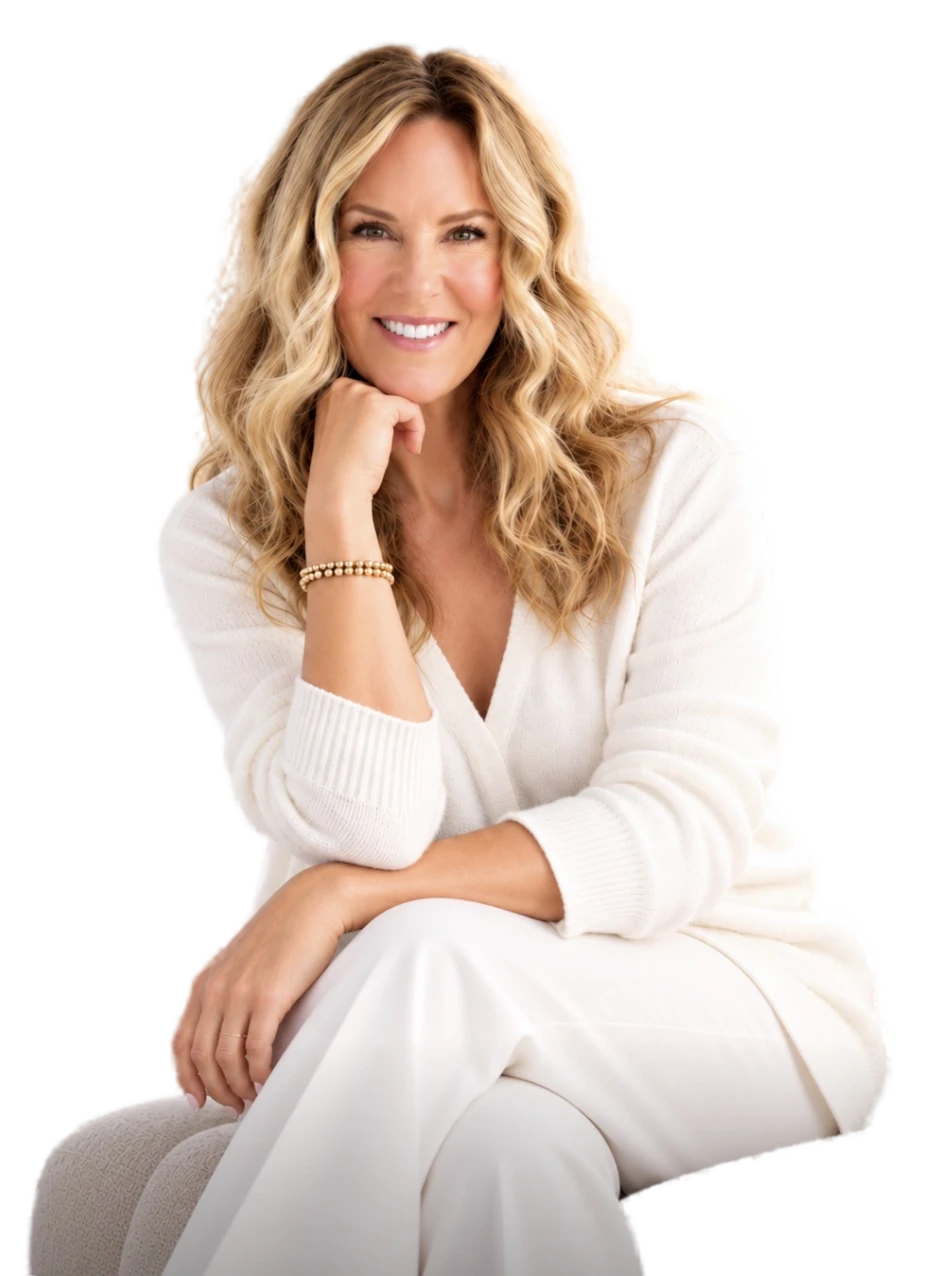
 Lynne Goldberg Meditation

On The Dana Download, Lynne talks about loss, generational trauma, and using meditation to recognize patterns and make conscious choices through difficult life changes.
Highlights
- “I think when we share our feelings and what happens, then there's community around us.”
- “So what I've actually learned is to step out and see what the pattern is that I'm repeating.”
- “I'm meditating to be aware of everything that I'm experiencing.”
Transcript
[Dana asks about Catching Your Breath and what led Lynne to write it.]
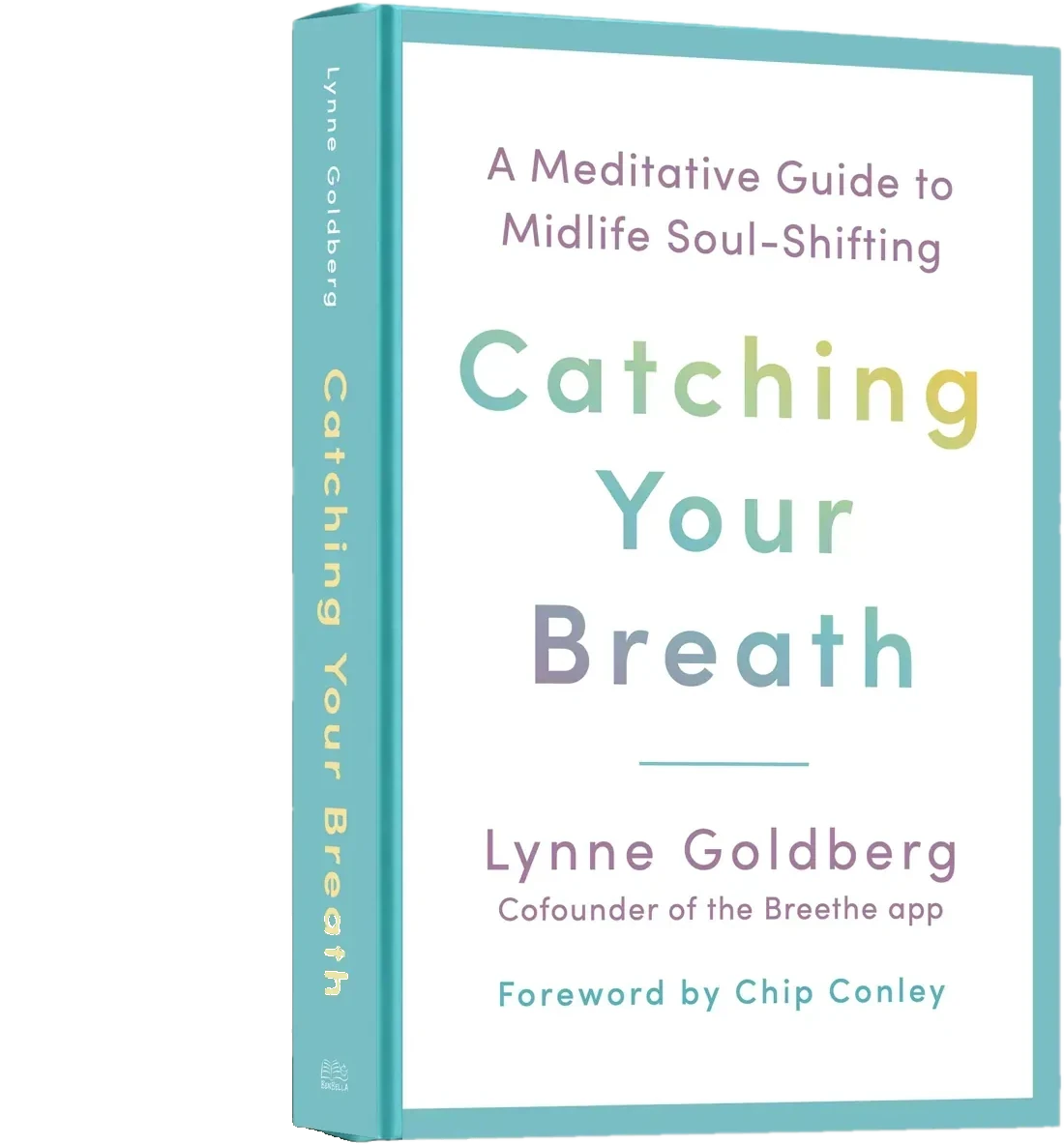
Lynne Goldberg: So this is my baby, my absolute baby. I started writing this after a couple of major life events happened, and I was like, oh my gosh, now what? So it was Catching Your Breath because it was literally that sucker punch that you get sometimes, and that's how I felt. And what I realized was that I had been, like so many of us, caught off guard and wanted to understand how to make conscious choices about what I was going to do next. And I think when we have an identity that we've held on to, and it disappears suddenly, there's a feeling of, oh, how am I going to navigate this change? And so for me, this book was one of the ways that I helped myself.
[Dana asks which life experiences shaped the book.]
Lynne Goldberg: Sure. I went through two cancer diagnoses. I had a 20-year marriage and my daughter went off to school. And then I ended up having a real career change. And so it was a lot of life events that I think are typically, I think middle age hits us with many of those, right? I don't think I'm unique. But I think when I started going through it, I recognized that, oh, there are so many other people that have so many similar experiences. And there was a lot of support and a sense of understanding my own pain by understanding what was happening to other people.
[Dana asks about the cancer diagnoses and Lynne's health now.]
Lynne Goldberg: I'm completely fine, thankfully. I was diagnosed with a non-Hodgkin's lymphoma initially. And then I ended up getting a malignant melanoma. And it was really a back-to-back event because it was COVID.
[Dana asks whether Lynne had just finished treatment for the first cancer.]
Lynne Goldberg: I had finished my treatment. Then my husband and I ended up ending our marriage. Then I got re-diagnosed with the malignant melanoma. And so it was just the perfect storm. And then my daughter went off to school.
[Dana asks what support Lynne had during that time.]
Lynne Goldberg: That's where this practice came in handy for me. Because what I realized is, 20-something, 30 years ago, I had twin girls die. And I had my mom die at 54. I just had many other similar events. So when it happened the second time around, I knew what to do. And I thought, oh, I've been here before. And I know that life doesn't end. And I know how I can help myself by this practice.
[Dana comments on Lynne's resilience after so many losses.]
Lynne Goldberg: I don't think I'm so unique. I think if you speak to anybody in this room, I really believe that. I think what happens to people is that we all go through stuff. And most people don't talk about it. And I think it's so supportive to actually talk about it. I think when we share our feelings and what happens, then there's community around us.
[Dana asks whether Lynne is comfortable talking about her twin daughters.]
Lynne Goldberg: Sure. So I had had a really tough time getting pregnant. And when I finally was able to, it was an in vitro pregnancy. And I was over the moon, just over the moon, and it had taken me eight years. And I ended up on bedrest. And then my career was sidelined for a period of time. Obviously, it was pre-internet, so I'm dating myself. But I had delivered twin girls at six months, basically. And they lived for two days. And then when they passed, there was really this sense of, at the time, I'll never have a kid, I'll never be able to have a family. And thankfully, I have three children.
[Dana asks about the writing process and what's in the book.]
Lynne Goldberg: So for me, it was a real journey. I ended up starting to write just because I was so surprised. My ex-husband at the time asked me for a divorce on New Year's Eve.
[Dana asks whether that was just after cancer treatment.]
Lynne Goldberg: It was about six months after. And so for me, that was the beginning of, oh my goodness, I didn't see this coming. Now, I write about what happened in the book. And the fact is, I should have seen it coming. And I was blissfully choosing to be unaware. But I really didn't imagine that. I thought you fight and you make up and you fight and you make up, which wasn't so healthy.
Lynne Goldberg: So what I realized from that was, there were a lot of patterns that I hadn't really looked at in myself that I wanted to be very conscious about how I went forward. And I recognized that I had seen this movie before. And it didn't end well. So I wanted a different ending for myself. And so as I was writing the book, I really started doing research. I spoke to lots and lots of people who I valued their opinions. And I really invested a lot of time and energy for myself to learn about what I was doing so that I could then help other people.
[Dana asks how long the book took to write.]
Lynne Goldberg: I would say it's a four-year process.
[Dana asks what pitching the book to publishers was like, and says a major publisher taking on a book is a great accomplishment.]
Lynne Goldberg: For me, this has been the greatest joy and the most fun I've ever had. I love writing, and I realize that speaking to people and talking, it's just so interesting to me to be able to share things that I'm interested in with other people that are also interested in them. So I just love it.
[Dana raises generational trauma, drawing on her own family's Holocaust history.]
Lynne Goldberg: I'd be super interested to hear how you notice it come up for you.
[Dana describes her work documenting Holocaust survivors and asks about the relationships Lynne discusses in the book.]
Lynne Goldberg: So what I write about in the book is actually, one of the things that I did was when I started dating, I really allowed myself the possibility of dating a lot of different people. I was really curious about all religions. I just didn't have any sense of, I'm going to be just limited to this one. I wanted to see who I was if I didn't have any preconceptions about my identity. And that's hard to do, right? It's hard to allow yourself to be completely open. And I did it deliberately. I really wanted to feel. And what ended up happening is, as I was on these dating apps, I ended up being drawn to not only Jewish men, but Jewish men who happened to be sons of survivors.
[Dana notes that Lynne only found out they were sons of survivors after meeting them.]
Lynne Goldberg: And then they kept having these completely identical patterns.
[Dana asks how those patterns affected the relationships.]
Lynne Goldberg: Well, it's fascinating, because if you really look at meta-patterns, if you really look at how generational trauma affects people, one of the things that was very interesting for me was that there was a lot of people who had literally had to hold their feelings inside. So I'm a big feeling person. I'm big on feel your feels and share. And what I recognized was that if you have gone through the unspeakable, you have learned to not speak about things that are so personal. And I think that's very, very deep and so painful. And so many of these survivors' children had grown up in a home where there was a lot of shame, and a lot of holding things inside because it was too dangerous to share.
[Dana asks whether emotional reserve was the main difficulty.]
Lynne Goldberg: I don't think there is an issue.
[Dana suggests describing it as a characteristic instead.]
Lynne Goldberg: I would say that it was an exploration for me and it was actually really interesting for me to recognize how fortunate I had been because I didn't have that. I came from North America where I was allowed to be who I was and I didn't have to have that pain and trauma. And I realized just what a blessing and what a gift freedom is.
[Dana reflects on how her family was affected and asks how the book helps readers through difficult times.]
Lynne Goldberg: What I think it hopefully does is shares the common thread that we all have is being human, and being human is hard, right? And I think that when we recognize that there are certain abilities that we all have that are universal, that we can all learn certain tools that can help us navigate difficult periods in our lives. And what I wanted to do is, I have this tool that I've been practicing for 30 years that has helped me navigate everything in my life, and there's been lots of stuff.
[Dana asks what that tool is.]
Lynne Goldberg: That tool is meditation. And so meditation, not in a basically I breathe every day and I feel relaxed, but in a meta-awareness, able to step out of my day-to-day stuff from a big-picture perspective, see the patterns and then choose what comes next. I call it choicefulness. That in every moment we have the opportunity to choose how we respond is vital.
[Dana shares how she has learned to avoid unnecessary arguments in her marriage.]
Lynne Goldberg: So I think that's part, recognizing when to speak. But also I didn't speak for a lot of years. I was very silent. I tried to keep the peace and I was a great peacekeeper. And what I found, that was one of my patterns. That was one of the things that I did that didn't help me necessarily because then the resentment builds and all the things that come with that end up being problematic later on. So what I've actually learned is to step out and see what the pattern is that I'm repeating. And oftentimes it's from your parents, right? What did you learn? And I'd be curious about your parents, coming from a Holocaust survivor perspective, they probably had to keep the peace a lot.
[Dana asks for advice for people facing hard times or trying to live more openly.]
Lynne Goldberg: So I think we get sold a bill of goods. I think all of us grow up and we have our parents' voices in our heads and societal voices in our heads, and we get to a stage in our lives where we say, this isn't working. What I've been doing before isn't working. So one of the things that I advocate for is radical recognition. This idea that if you don't pay attention to what's happening and you tell yourself stories, you're going to end up with the same old same old. So that's step one. I have a five-step thing.
[Dana invites Lynne to explain all five steps.]
Lynne Goldberg: The second thing is feeling your feelings. So often we tell ourselves, oh, I shouldn't be, and I'm just going to put a brave face on, or I'm going to be positive and upbeat. And that is toxic positivity. And what you end up doing is holding down so many of the feelings that we actually have that they come out crooked. So it's that feeling of being there for your feelings, knowing how to feel your feelings. And that's part of meditation. There's some steps that you can practice that can help you actually learn to have overwhelming feelings and not be overwhelmed by them. So you relate to them with a bit of perspective.
Lynne Goldberg: Then there's this idea of actually being adaptable. So life changes all the time. Things happen all day long. And if we're holding on to the way it was and we want so desperately for everything to stay the same, we end up being unhappy because life is changing. So it's how you adapt and how you respond to the different activities.
Lynne Goldberg: Then I have alchemy. So the idea that when something happens, like for example, my marriage broke up, how can I alchemize that and make it into something that works for me today going forward? So what do I want to see in my life? And so there's the idea of creating your dream life. What do you need? What do you want? What are your values? How do you see yourself?
Lynne Goldberg: And then finally rising, and this idea of interconnection, that we're all interconnected, that we all share all the same stuff, and that if we can somehow bring each other up in the world, then we create a society that we all want to be in.
[Dana asks whether Lynne still consciously works through the steps.]
Lynne Goldberg: At this point it's ingrained.
[Dana asks whether Lynne now makes perfect decisions.]
Lynne Goldberg: Perfection is not something I aspire to, first of all. I think that there's always an opportunity to catch yourself in the moment. Oh, this isn't working. Let me adjust. I think that's part of being human. But I think what's important is that when I see myself going down a road that I've been down before, I can catch it.
[Dana asks whether this practice has made Lynne's life richer.]
Lynne Goldberg: I would say that I am living my best life. I'm not saying life is perfect. I'm saying that we have a choice in every moment where to put our attention. And if I choose to focus on the stuff that's going well and the things that bring me joy and light, then I create more of that. And when I focus on the stuff that sucks, I could be really dark and I don't want to live there.
[Dana asks where listeners can find the book and Lynne's work.]
Lynne Goldberg: So you can get the book anywhere books are sold. And if you go to my website, LynneGoldbergMeditation.com, and Lynne, L-Y-N-N-E. And @lynnegoldbergmeditation on Instagram.
[Dana asks which moment changed how Lynne sees the world.]
Lynne Goldberg: It's a simple answer for me because the moment that I learned how to meditate and I recognized that I wasn't just this one single soul, but that I was connected to everybody in the world, it changed everything. I don't see people's pain as other people.
[Dana describes her racing thoughts and asks whether meditation can work for everyone.]
Lynne Goldberg: You're the perfect candidate. And I was you. So I could not turn my brain off. And it's so trainable. And it's such an easy skill to learn. And it's one of those things that is just dose dependent.
[Dana asks whether meditation means being fully present and deeply relaxed.]
Lynne Goldberg: So it's not even about getting relaxed. Sometimes I'm not relaxed.
[Dana asks whether that includes during meditation.]
Lynne Goldberg: I'm not meditating to achieve a certain state like relaxation. I'm meditating to be aware of everything that I'm experiencing.
[Dana says this description of meditation is new to her.]
Lynne Goldberg: That's all it is. It's about being aware on purpose, moment to moment. That's it.
[Dana invites Lynne to share a final thought.]
Lynne Goldberg: I just am grateful to be here. Gratitude. How's that?
The book
Catching Your Breath
Lynne's new book, on meditation, choicefulness and the changes life brings.