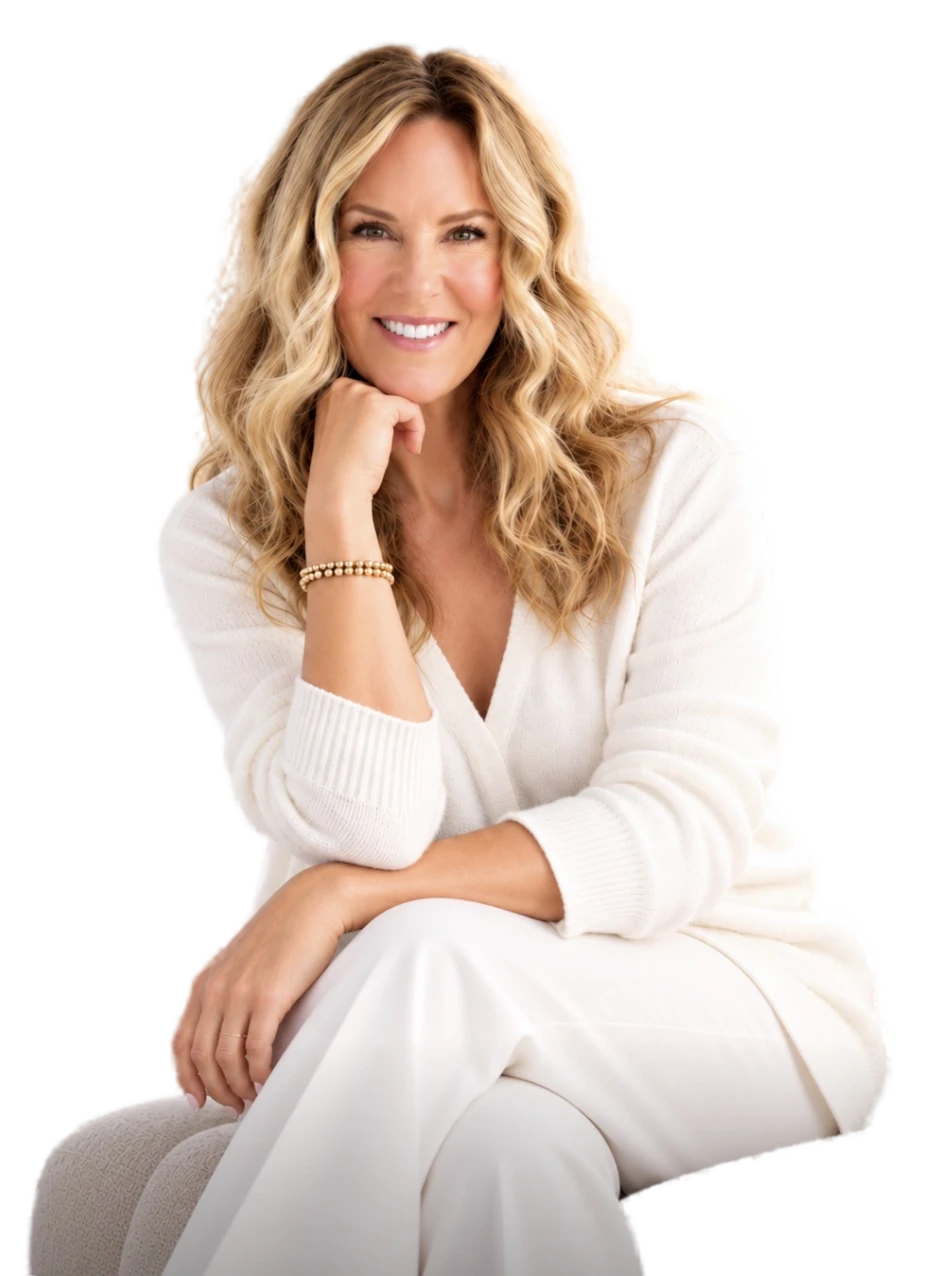
 Lynne Goldberg Meditation

Listen on The Due North Podcast with Natalli Amato
On The Due North Podcast, Lynne talks about choicefulness, using meditation through life upheavals, and finding self-love, connection and new possibilities in midlife.
Highlights
- “But how we respond to those events is completely within our power.”
- “So I think that just recognizing what's actually happening in the moment is huge.”
- “But I do think that hearing other people share similar experiences normalizes what other people are experiencing.”
Transcript
[Natalli introduces Catching Your Breath and asks how Lynne arrived at its title.]
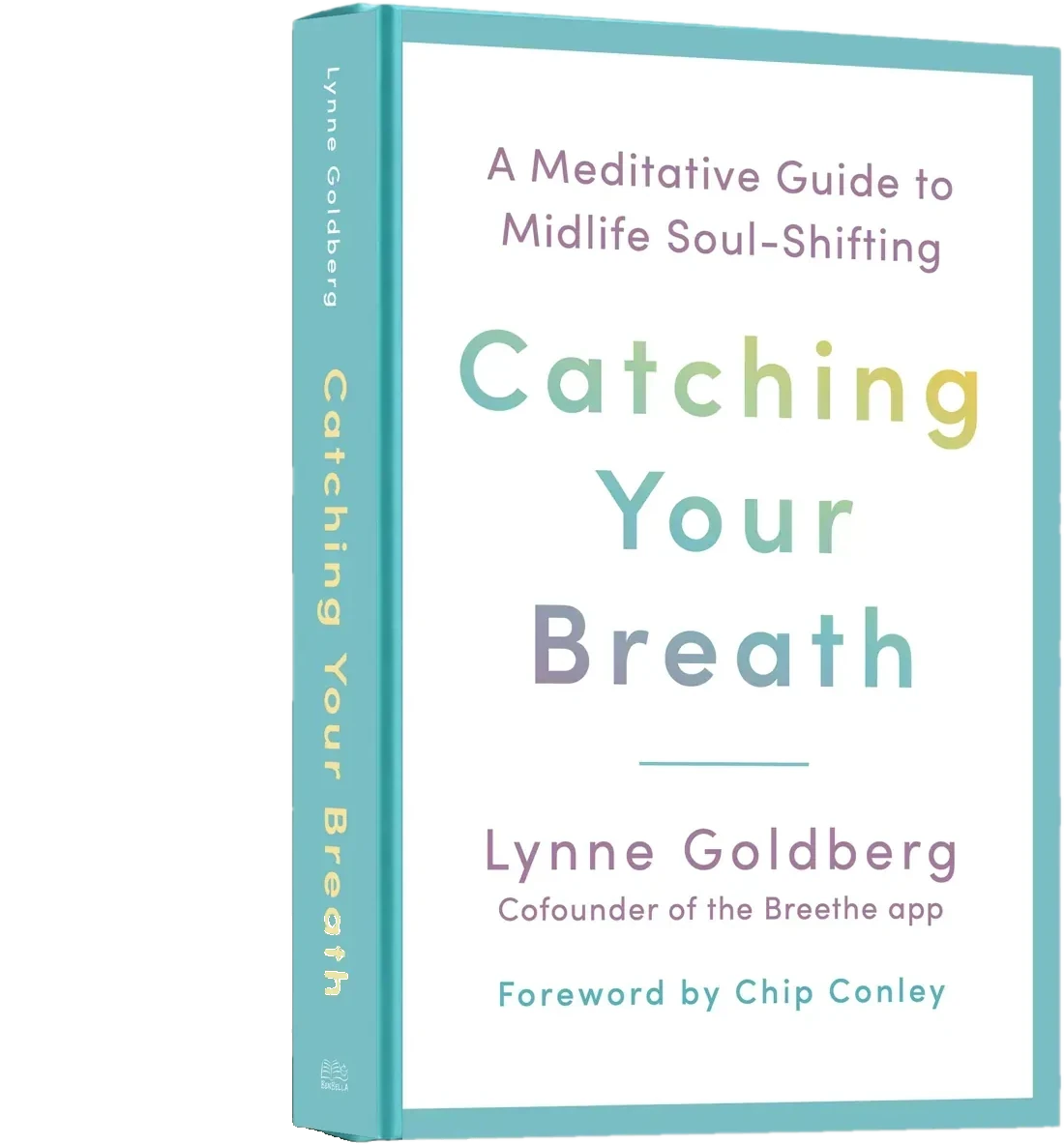
Lynne Goldberg: So can I show you my baby? This is Catching Your Breath. And it's actually the idea of when life gives you a sucker punch, you sometimes get winded. And I think so many of us get to a place in our lives where we have challenges and we are caught off guard. Sometimes it's just life itself. It's just recognizing, hey, I've been down this road before and I see this as something that hasn't worked out in the past. I'd love to figure it out better this time. And that feeling of, okay, what's next? What am I going to do next? Was something that I really wanted to embrace. And oftentimes we get to that what next part, but we don't pause and breathe. So this was really about catching your breath, coming to this from a place of choicefulness. This idea of choosing what comes next from a place of intention rather than reaction.
[Natalli asks how choicefulness helps when an unwanted event changes life's direction.]
Lynne Goldberg: I love that idea that in every moment we have a choice. And the events that happen to us are often not our choices. But how we respond to those events is completely within our power. And I think so often we feel so powerless because an event happens and we're like, well, I wasn't expecting that. And I think we all go through life thinking that we have so much control over life, and then it happens and we're like, whoa, what happened here? How come I don't have control? And so rather than feeling powerless, which is such a crappy feeling, the idea that we do have a choice in how we respond to life events is our power. And I think that's really vital for any time that we have an event happen.
[Natalli draws on her work as an EMDR therapist and asks how Lynne came to recognize the power of choicefulness.]
Lynne Goldberg: So I've had a series of what Bruce Feiler calls lifequakes. So when your whole world blows up, I had it 30-odd years ago when I lost twin girls. My mom was 50-something when she was diagnosed and she died, and I lost my job and then my marriage broke up. So it was just a series of life events that happened within a very short window. And that's how I came to meditation in the first place. And I was really lucky because it was her doctor, my mom's doctor, that actually said this stuff works. And this is a long time ago. So people weren't meditating then.
[Natalli reflects on the timing of that recommendation.]
Lynne Goldberg: Completely, exactly. So I was so blessed and I ended up finding this tool that had become so vital for me. And it really helped me navigate all of these challenges. At that point I still didn't understand that concept of choicefulness. So however many years go by, and I had another series of life events, and they seem to happen all together for some reason. The clusters happen. And I ended up getting diagnosed with cancer twice, and then my marriage broke up, and then my daughter went off to school. These are not necessarily awful things in and of themselves, but all together again. And I thought, I've been here. I understand this and I have a choice in how I'm going to respond to all of it.
Lynne Goldberg: And what I found was that giving myself permission to allow myself the grieving process with a sense that each one of these events gave me the opportunity to choose what came next. So for example, with a cancer diagnosis, which was really significant because they were two back-to-back, I thought, okay, well, so how am I going to navigate this? And it was during COVID and there was all kinds of reasons that it was more challenging. And what it ended up giving me was a sense of, okay, this is a real time-out. This is my opportunity to decide how I've had this mind-body connection that is clearly telling me something, and I get to choose what to listen to right now. And your body is saying, hey, pay attention. And I said, okay, that's a good choice. I'm going to pay attention. It's giving me a lot of information here. So that was one opportunity.
Lynne Goldberg: The second, with my marriage breaking up, which really became part of that opportunity, my body as it was falling apart was giving me cues that this was not working for me. And so I think that decision was really, now let's be honest, I did not make that decision. It was not like I was so wise and I understood. But I did understand that when the marriage did end up being over, I had a choice as to how I wanted to handle it. And the anger and the bitterness, that wasn't working for me. So again, how do you navigate those choices? And I find that each time I was able to stop myself, watch what my reactions were, and then say, hey, I know this pattern. This isn't necessarily happening today. This is old shit. So I thought, oh, I don't want to do that anymore. I know how that movie ends and I want to start a new one.
[Natalli asks whether meditation and emotional regulation create a foundation for choicefulness.]
Lynne Goldberg: So I'd say that's a two-part answer. So the first one is obviously when you're regulated, you can make better decisions for sure. The second part to that for me is that when you are aware, I find that meditation has many wisdom pieces to it. If you're following a meditative practice, and there's different schools of thought, but they're pretty much the same wisdom teachings and the same wisdom traditions, which is basically life is impermanent, things happen, nothing stays the same. This idea of the second arrow. So you can't necessarily control what happens to you, but you can absolutely stop piling on. No guilt, no shame, all that stuff is within your control. So those teachings were very useful for me, but for anybody.
Lynne Goldberg: And there's so many, I'm not going to start listing each one of them, but the idea of these wisdom traditions that have 4,000 years of knowledge because it works. As my teacher used to say, this stuff works. And it really does. It's helpful because you recognize that life is, we're all of us dealing with stuff all day long. And when you can find proven traditions that have thousands of years of evidence that help people, why not borrow from those traditions? So did meditation necessarily help me get regulated? Yes. But did it also give me a map to how to navigate these transitions? Absolutely.
[Natalli reflects on the wisdom traditions behind meditation and the limits of treating it as a quick fix.]
Lynne Goldberg: I built an app based on helping people sleep, be calm, and relax. So I get that that's very important. And you cannot deal with life if you haven't slept. That's just a fact. So I'm not negating that those things are equally important. But I'm saying the happiness level and the fulfillment level and the sense of purpose that you can build for your life, which overall you can't get to if you're not sleeping. But if you want to have a fulfilling, creative, rich life, and you want to make sure that you can deal with the stuff that comes up, because it always comes up, then there's some stuff that helps.
Lynne Goldberg: In the book, I use science. I use wisdom traditions. I use all different languages. Whatever is going to help someone understand concepts is how I want to be able to speak to people. I think those traditions are massive, but I also think they have correlates in all different areas. So, for example, what I find amazing is how much of psychology is based on these traditions. And when you see the overlap, you can't not see it. It's so cool.
[Natalli connects this with the need to meet basic needs before pursuing fulfillment.]
Lynne Goldberg: When you're worried about surviving and not thinking about fulfillment, that's for sure. You're 100% right. I was very fortunate in that one of my teachers was a quantum physicist.
[Natalli asks about that scientific perspective.]
Lynne Goldberg: So I was so blessed because she was able to speak about these traditions, but from a scientific perspective. So lucky to have had that training as well. So I feel like however you approach the problem, if you want to call it a problem, or the challenge, you get to the same root. The solution is pretty much the same.
[Natalli asks how to begin making different choices during a major life upheaval.]
Lynne Goldberg: So I think the first step is what I call radical recognition. Because we all tell ourselves stories. I was in an unhappy relationship for lots of years, but I didn't want to acknowledge that truth to myself. And it's not that that voice wasn't telling me. It was there. It was loud. But I chose to push it away. And I think we all do that to a certain extent when there's some decision that we're not prepared to make. So I think that just recognizing what's actually happening in the moment is huge. And I think we have many opportunities. I think having some form of pause allows you to do that clearly. That's number one.
Lynne Goldberg: I think feeling and not pushing feelings away. So I call it feel the feels, but it's just that idea of actually feeling whatever is happening without trying to minimize it. And I find people, I have these conversations all the time where something happens to somebody and people say, well, look at the bright side or look how lucky you are. And I'm like, no, right now in this moment, you just got punched in the gut. Feel it, because how does that actually feel in your body? And I think that allowance of not pushing away the sensation is massive. So I think that's my second piece to this.
Lynne Goldberg: Then there's the adaptation phase. So I think that the idea that things are always changing and that we have the ability to ride that wave in whatever form that happens. And that doesn't mean toxic positivity. Oh, everything's going to, I don't mean that. I mean, seeing this is what happened and how am I going to respond to it? So that's that opportunity.
Lynne Goldberg: Then the alchemy piece. So, okay, my marriage of 20 years just ended. This is my new reality. So that's the adaptation. How can I now choose what comes next? And that's where I think choicefulness really becomes vital. The, oh wow, I have an opportunity to travel more. So whatever meaning that you then allow yourself to make from that event.
Lynne Goldberg: And then finally the rising stage. And for me rising looks like recognizing that we're all human, we're all in it together, and that we can learn from each other. We can rise up together. We can support one another. This idea that we're all alone in our experience is so not true. And I think very often when you're going through something, you're like, no, but mine was worse. You can't imagine. It was so much worse than what you experienced. If you only knew how bad my, and that feeling of not recognizing that all of us are surviving the best that we possibly can. And that when we allow ourselves to have each other to lean on, to support one another, to learn from, to grow together, all of those experiences help us all collectively rise. And I think that's really that interconnection that is vital for any hard experience.
[Natalli asks how someone who feels afraid of trusting others can begin to accept support.]
Lynne Goldberg: So I think that reaching out to other people, if you feel that it's scary and you're not ready to trust, that's okay too. I recognize that I wasn't necessarily ready to join a support group. That's not kind of my thing. So I think putting this expectation on people that there's a right way or a wrong way is not really what I think is helpful. But I do think that hearing other people share similar experiences normalizes what other people are experiencing. So I think when you go to AA, for example, and you listen to a lot of other people share their experiences, there's that sense of collective. It works for a reason. It's been around for a long time. I think that support groups in general are out there. And loneliness is one of the biggest problems right now in North America, probably in the world. But I only know the statistics for North America.
Lynne Goldberg: But that idea that so many of us walk around with our scripts. And how are you doing? Great. And that facade of great isn't really what's happening for most people. And when you just start to scratch the surface, and I'm fortunate enough that my work allows me to speak to people, so I end up knowing how universal this is. But I think it's so useful. It's just so useful to be able to actually share, because the minute you start sharing, people have similar stories. And then that feeling of, oh, I'm so alone in my pain goes away.
[Natalli suggests practicing openness in small moments before trying a larger step such as joining a group.]
Lynne Goldberg: Absolutely. And I think for me, one of the most interesting parts to that was this idea of shame. So we're so reluctant to acknowledge that we're imperfect as humans because there's the expectation that everybody else is somehow, that we're not enough. And so the minute we show ourselves as being vulnerable, we're allowing ourselves to have our imperfections show. And I think that that's, to answer your question from before, probably one of the biggest things when you recognize that all of us are imperfect. We're all perfect in our imperfection, actually.
Lynne Goldberg: And so Ram Dass said, and I'm going to mangle his quote, but the idea that the trees are, you walk into a forest and some trees are tall and some trees are crooked, and you recognize that some got more sunlight than others. Well, that's how we are as humans, and that's the truth. So I think that recognizing that all of us come from our own patterns, and so that idea that some of us are more able to risk being vulnerable and some of us are more shy.
[Natalli asks how Lynne developed that sense of grace and shared humanity.]
Lynne Goldberg: So I think I've been really blessed to have lots of really great teachers. And I'm really curious. I was always very interested in shadow work. I was always very interested in IFS. I've been lucky enough to interview lots of really interesting, smart people who tell me really important things that changed the trajectory of my life. So I've been really lucky. And I think once I recognized that the way I might have handled that first recognition of, oh, you're just a seven-year-old in an adult's body doing your best because that was really your survival mechanism. So you're not doing anything wrong. So I think that's part of it. And then the other piece to that is this whole self-love experience for me is probably the biggest change in my whole life. In everything that I understand from meditation, that I teach in meditation, I find that self-love practice vital.
[Natalli reflects on compassion for younger parts of ourselves and on how self-love practices can feel unfamiliar.]
Lynne Goldberg: I teach it a little differently. And for me, it's a much more somatic experience because intellectually the words don't mean something to me. So my metta practice is a little different, but I think however you arrive there, the message is the same. We're all doing our best, and each one of us wants to be happy, and all of us want to be safe.
[Natalli reflects on the physical experience of love and healing.]
Lynne Goldberg: So I think that that gap between understanding something intellectually and feeling it in your body is so important. And so bringing the two together, mind, body, you can't beat that.
[Natalli asks about Lynne's practice of intentionally inviting a feeling into the body.]
Lynne Goldberg: I find that such an interesting concept, because I never understood that I actually had the power to choose my emotion. And I'm not talking about saying, oh, it's going to be great today. That's not what I mean. I mean the feeling in your body of despair. And Jill Bolte Taylor talks about this. She talks about the idea that you have a thought which triggers an emotion in your body. And then when you have that thought and you feel the emotion, you only feel that for 90 seconds. And every time you revisit the thought, that's on you. So your thoughts, especially as a meditator, you watch your thoughts. That's what you do all day long, moment to moment. And if you're aware where your attention is being focused, then you get to watch what you're bringing into your world.
Lynne Goldberg: So the second you notice, oh, it's been 90 seconds and I'm still on this thing. And next thing you know, it's four and a half hours later and you're still worrying about the text that you didn't get. Well, that's on you. The first 90 seconds, you're allowed to feel, oh, maybe they don't like me. There's the anxiety, whatever the story that you're telling yourself might be. But then how do you want to feel? How do you want to go through life? And that you get to invite in. That opportunity is yours in every moment all the time because it's the stories we tell ourselves.
[Natalli reflects on how identifying with thoughts can make those stories difficult to change.]
Lynne Goldberg: That idea that our brains are lying to us, basically, I'm overstating it, but it's not that crazy. We have a movie reel that's based on our experiences. And so if you touch a stove and you see that it's hot, you're not going to keep touching that stove. And as kids, we might've gotten slapped. And that was the way that we knew to withdraw. So when you go to text somebody and you feel as if you're being slapped, you're not going to be as willing to put yourself out there. I'm using a silly example.
[Natalli observes that a small example can reveal patterns in larger experiences.]
Lynne Goldberg: Exactly. So I think that idea is such a powerful notion, that our minds, the stories that we tell ourselves, we have the opportunity to change our narratives all day long.
[Natalli asks what writing the book was like.]
Lynne Goldberg: I have to say it's my most favorite thing I've ever done, ever. I loved it. First of all, I was so lucky I was able to speak to really brilliant people. So I got to meet some of my heroes. I was able to meet Dr. Robert Thurman before he passed. I was so lucky. I spent a weekend with him. A lot of the interviews, I got to spend extended periods of time with people whose opinions, and who are so brilliant and who have shaped me in so many ways. Then I got to actually interview them. For me, that was one of my greatest gifts.
Lynne Goldberg: I love sitting down and understanding something in written form. It's almost like a journaling process for me. So I was able to sit down, I would start at like seven in the morning and I would sit there and the day would go by and it would be the end of the day and I'd be like, how did that happen? And it was just this flowing process that was so organic and so enjoyable and it felt so enriching. And it helped me clarify so many things for myself as well because I wrote this after all of those life events. And so it was processing in real time with things that I already had been teaching. So it was helpful for me to use my own lessons. It was very instructive.
[Natalli asks whether any of the book interviews surprised Lynne or affected her in a special way.]
Lynne Goldberg: I would say there's so many things. The whole book is based on all the learnings and all the wisdom. And also interesting for me to see, there's a woman that I interviewed that had gone through a cancer diagnosis and had changed her life. And I don't want to go into the whole story because it's fascinating, but she ended up becoming a chaplain at Rikers Island and totally shifted her whole life as a result. And it was just so interesting to me to understand how certain people have challenges and not only just rise from those challenges, but also choose such interesting different paths that they might not have been able to have experienced if they would have just gone on doing the automatic pilot, just same old same old without having a little bit of a shake-up.
Lynne Goldberg: And so those opportunities that we sometimes at the moment see as being the worst thing that ever happened can sometimes be the most enriching, most beautiful, life-changing events for a good reason.
[Natalli reflects on discovering ways of connecting with life that were previously unexpected.]
Lynne Goldberg: Exactly. And sometimes those events bring you into new situations. I talk about dating in my late 50s, early 60s. It was a new experience for me. And I hopefully tell some funny stories because dating after menopause can be interesting. And it was a really fun time in my life that I wouldn't have had. One of my girlfriends said to me, oh, you're so lucky. You get to have that pitter-patter again. And a lot of other people said to me, oh my God, I can't imagine. And I thought, well, no, because I could choose to look at the situation like that, but that's not going to serve me well.
[Natalli asks what common obstacles prevent people from being open to new experiences.]
Lynne Goldberg: So I have a whole chapter on fear. And I think that fear, without getting too esoteric about it, ultimate fear of death, which is probably our biggest fear, and everything along the way to the ultimate fear of death. So failure, fear, all our fears keep us in three states that are either fight, flight or freeze. And I say reacting, not responding, on purpose. When we're in that reaction mode, which is automatic, we're not in our bodies. We're not in our highest self. We're not in a responsive state. We're not practicing choicefulness. And so I think that every single time you can take yourself out of that state, you get to choose.
[Natalli compares practicing awareness of fear to building a muscle.]
Lynne Goldberg: I'm scared of heights. I'm terrified of heights. And I love to hike. And I love to hike on mountains. Mountains are high. Every time I go around a corner and I see it, I think to myself, I could choose to not experience this. What a shame that would be. So it's a choice. And I'm not saying I don't feel fearful.
[Natalli observes that fear can remain present alongside the experience.]
Lynne Goldberg: It can coexist. Yes, I feel fearful. How I choose to interpret that fear. There are butterflies in my stomach. My heart is pounding. Maybe that's excitement. Do I need to be labeling this as a bad sensation?
[Natalli reflects on distinguishing thoughts from bodily sensations.]
Lynne Goldberg: And that's exactly where catching your breath comes in, right? When you can pause and catch your breath.
[Natalli asks whether Lynne had a favorite chapter to write.]
Lynne Goldberg: I did one on sex that was really fun. Because I think that so many of us my age, I'm older than you, so I don't know how you feel about this, were taught that sex was taboo. There was some sort of taboo and there was a sense of not feeling allowed to talk about pleasure as a woman. And there was so much shame. And I think just recognizing all the stories that we've told ourselves about sex allows us, especially in perimenopause and menopause, to allow ourselves to be completely at home in our bodies is such a gift.
Lynne Goldberg: And I really want, I'm going to tear up actually, but when I think about what I would love this book to be able to do would be to help normalize that for people to recognize that sex is fun and we're not going to get pregnant at this point. So hello, enjoy yourself.
[Natalli discusses how shame and taboo around sex can persist across generations.]
Lynne Goldberg: And also just recognizing our kink, not getting caught up in the labels.
[Natalli connects those labels with the stories and judgments people bring to other parts of life.]
Lynne Goldberg: Internally, exactly.
[Natalli asks when the book will be available.]
Lynne Goldberg: January 2027, soon. And it's on pre-order now. So if you go to my website, you can order it, or Simon & Schuster has it, Catching Your Breath. Everywhere actually, as I'm saying it, I'm thinking, no, that's Barnes & Noble, Amazon, all those places.
[Natalli asks how listeners can follow Lynne and keep up with her work.]
Lynne Goldberg: My website is LynneGoldbergMeditation.com. And so you can follow me there, or see what's happening there. I'm @lynnegoldbergmeditation on Instagram.
The book
Catching Your Breath
Lynne's new book, on meditation, choicefulness and the changes life brings.